
Download the technical sheet (PDF)
Cameroon is the world’s 5th largest cocoa producer, with national output ranging between 280,000 and 310,000 tonnes per season. Behind these impressive figures lies a mixed reality: more than 600,000 growers, the vast majority farming less than 3 hectares, with average yields that top out at 400 kg per hectare, far below the agronomic potential achieved elsewhere. This guide covers everything a grower needs to know to establish, manage and profit from a cocoa farm in Cameroon in 2026, drawing on the technical references of IRAD, the CICC and SODECAO.
Planning a cocoa project or looking to protect your plantation against water stress? Request a free quote from the JOGOO Agriculture team.
Cocoa in Cameroon in 2026: key figures and production zones
Cameroonian cocoa farming has historically relied on five producing regions: the Centre (Ntui-Bafia basin), the South (Ebolowa, Sangmélima), the South West (Kumba, Konye, Muyuka), the Littoral (Nkam, Moungo) and the East (Abong-Mbang, Bertoua). The Centre and the South West alone account for about 70% of national production. For a broader overview of the country’s agricultural value chains, see our overview of agriculture in Cameroon.
On the world market, Cameroon mainly exports raw beans, with the Netherlands, the United States, Spain and Malaysia as the main destinations. The cocoa season runs from October to July, with two peaks: a main crop from October to January and a mid crop from April to July. Farm-gate prices rose to historic highs between 2024 and 2026, driven by production deficits in Côte d’Ivoire and Ghana, reaching more than 3,500 FCFA/kg for good-quality beans, nearly triple the levels seen in 2022.
Ecological requirements: climate, soil and altitude
The cocoa tree (Theobroma cacao L.) is a demanding species. A good cocoa farm starts with a site that ticks the following boxes:
- Rainfall: between 1,500 and 2,500 mm per year, well distributed. A marked dry season (less than 100 mm/month) lasting more than 3 consecutive months severely reduces yield.
- Temperature: annual mean between 21 °C and 32 °C, with minimums never falling below 15 °C.
- Altitude: ideally between 100 and 700 metres. Above 900 m, growth slows noticeably.
- Relative humidity: above 70%, which explains the performance of forest and degraded forest zones.
- Soils: ferralitic, deep (at least 1.5 m), rich in organic matter, pH between 5.5 and 7.5. Strictly avoid waterlogged soils and soils with a shallow water table.
- Shade: essential for at least the first 3 years, at 60-70%, then 30-40% at maturity.

A quick field test: if productive cocoa farms exist within a 20 km radius, the ecology is suitable. A soil test by an IRAD laboratory or an agricultural school is nevertheless essential before committing to planting investments.
In zones with a marked dry season (north-east of the cocoa belt, Haute Sanaga, the fringes of the South), water deficit is the main limiting factor. This is precisely why Mr DJOAH Yves Thierry, in partnership with IRAD in Ebolowa, used drip irrigation on his cocoa plantation: the first pods appeared just one year after planting, compared with several years under conventional rainfed management (see the JOGOO Agriculture project sheet). For details on how such a system works, see our guide to drip irrigation systems.
Recommended varieties for Cameroon
Variety choice determines 40% of a plantation’s yield potential. Three main genetic groups are grown:
Trinitarios
Natural hybrids between Criollo and Forastero, adapted to the Cameroonian climate. Beans with good aromatic quality, suitable for premium chocolate. Average yield of 800 to 1,200 kg/ha under intensive management.
Amelonado (Amazonian Forastero)
Cameroon’s traditional variety, hardy but low-yielding (400-600 kg/ha) and susceptible to black pod. Gradually being replaced by hybrids.
SNK hybrids selected by IRAD
The cultivars SNK 10, SNK 13, SNK 16, SNK 64 and SNK 623 are the current references in Cameroon. They combine early bearing (first production at 30 months), high yields (1,500 to 2,500 kg/ha) and better tolerance to black pod. These hybrids are produced by SODECAO and distributed through MINADER’s regional delegations.
A grower establishing a new plot today would do well to choose a mix of at least 3 SNK hybrids to spread risk and stagger flowering.
Nursery: from bean to seedling
A good nursery sets the vigour of the plantation for the next 30 years. Key steps:
Preparing the bags
Use black polyethylene bags of 20 × 25 cm, perforated at the base. The ideal substrate: 3 parts forest topsoil + 1 part sand + 1 part well-decomposed organic matter (pig manure or compost). Fill the bags and line them up in partial shade under a shade net (60% shade).
Bean selection and sowing
Extract the beans from healthy, ripe pods taken from identified trees (clone mother trees at certified growers). Sow immediately after extraction: cocoa beans lose their viability within 8-10 days. Push each bean 2 cm deep, tip down, into a bag. Plan 10-15% extra bags to make up for failures.
Nursery care
Water morning and evening during the dry season. Weed by hand. Watch for the main pests: defoliating caterpillars, snails, thrips. At 4 months, gradually reduce shade to 40% to harden off the plants before transplanting. At 6 months, ready plants measure 30 to 40 cm in height, with a stem that has turned woody at the base.
Indicative costs
For a nursery of 1,500 plants (needed to establish 1 ha at the recommended density + reserves): about 90,000 to 130,000 FCFA if you raise them yourself, compared with 150 to 250 FCFA per plant from approved nurseries. A grower can therefore save up to 250,000 FCFA/ha by running their own nursery, provided the starting beans are right.
Establishing the plantation
Land preparation
Ideally, prepare the land 6 months before planting. Clear selectively, keeping permanent shade species (fraké, iroko, mombin) at 20 to 40 trees per hectare. On fully cleared land, establish temporary shade crops: plantain (400 plants/ha), papaya or oil palm, planted 6 months before the cocoa trees.
Staking and density
The recommended density is 1,333 plants per hectare, at a spacing of 3 m × 2.5 m, which allows light mechanisation and good air circulation. Some more intensive growers go to 2 m × 2 m (2,500 plants/ha), but individual yields per tree fall and disease pressure increases.
Holing and soil amendment
Dig the holes 15 days before planting, measuring 40 × 40 × 40 cm. Keep the topsoil (first 10 cm) separate from the subsoil. When backfilling, mix the topsoil with 3 to 5 kg of well-decomposed manure or compost and 100 g of dolomite or agricultural lime if the pH is acidic.
Transplanting
Transplant at the start of the main rainy season (March-April in the Centre-South, April-May in the South West). Carefully remove the bag, place the root ball in the hole with the collar at ground level. Firm lightly around it, water generously and mulch with 5 cm of plant material over a 50 cm radius around the plant.
Crop programme year by year
The cocoa tree starts producing from 30 months (SNK hybrids) and reaches full potential at around 7-8 years. Here are the main annual stages to follow:
Year 0 (establishment)
Clearing, temporary shade, nursery, staking, holing, transplanting. The heaviest investment: 600,000 to 900,000 FCFA/ha (equipment, shade, plants, labour).
Years 1-2 (vegetative growth)
Weeding 4 times a year, monthly removal of suckers (chupons at the base and on the trunk), replacement of missing plants (5-15% of plants in the first months). Strict control of invasive weeds: imperata, chromolaena. No harvest.
Year 3 (first production)
Canopy formation: select 3-5 main branches on each cocoa tree. First small harvest (100-300 kg/ha). Introduction of fruiting pruning (end of the dry season).
Years 4-6 (ramp-up)
Yields rise steadily: 400 kg, then 800, then 1,200 kg/ha depending on management. Systematic fertilisation. Crop protection treatments 4 to 6 times a year against mirids and black pod. Gradual removal of temporary shade (plantains).
Years 7 to 25 (optimal production)
Mature cycle: yields stabilised between 1,500 and 2,500 kg/ha under intensive management, 800 to 1,200 kg/ha under improved management. Heavy annual pruning after the main crop. Gradual replacement of unproductive trees (5% per year).
Year 25+ (renewal)
A strategic decision: rehabilitation by coppicing (cutting the trunk back to 40 cm above the ground so the tree regrows from the stump) or complete replanting.
Fertilisation and soil amendments
Mineral fertilisation multiplies yields by 2 to 3 compared with management without inputs. On producing cocoa, the NPK formula 12-11-18 + 3 MgO remains the reference. Recommended rates:
- Years 1-2: 100 g/plant of NPK 20-10-10 in 2 applications (start and end of the rainy season).
- Year 3: 200 g/plant of NPK 12-11-18 in 2 applications.
- Year 4 onwards: 300 to 400 g/plant of NPK 12-11-18 in 2-3 split applications (i.e. 400 to 550 kg/ha/year).
Apply to the soil, 40-60 cm from the collar, in a half-circle under the canopy drip line. Work in lightly with a hoe to limit losses. Every 3 years, add 5 t/ha of manure or compost + 200 kg/ha of dolomite on acidic soils. For a full breakdown of NPK formulas and their equivalents, see our guide to NPK fertilisers. Among organo-mineral biofertilisers suited to African soils, the AgriBiosol range gave good results in JOGOO trials on maize (+32% stalks, +47% cobs) and can also be used on cocoa for foliar feeding.
Main diseases and pests
Black pod rot (Phytophthora megakarya)
The fungus responsible for the heaviest losses in Cameroon: up to 60% of the harvest on an untreated plot. Symptoms: brown spots that spread over the pods, which end up black and mummified. Control: preventive copper-based treatments (2% Bordeaux mixture) or systemic active ingredients (metalaxyl-copper) every 3 weeks during the high-risk period (June to October). Collect and destroy diseased pods. Prune for good air flow.
Mirids or capsids (Sahlbergella singularis)
Sap-sucking bugs that cause young shoots and pods to dry out. Attacks are most severe from July to December. Control: treat with imidacloprid or thiamethoxam in two passes 21 days apart, as soon as the first feeding lesions appear.
Swollen shoot (CSSVD virus)
A progressive and dangerous viral disease, found mainly in the South West and transmitted by mealybugs. Symptoms: swelling of branches, leaf discolouration, deformed pods. Control: uproot and destroy diseased trees; there is no curative treatment. Prevention through strict mealybug control and the introduction of tolerant varieties.
Other pests to watch
Stem borers, pod-damaging squirrels, rodents and, increasingly, carpenter ants. Every cocoa grower should keep a crop protection logbook updated monthly.
Harvest and post-harvest processing
The quality of Cameroonian cocoa depends 80% on post-harvest processing. A well-managed plantation with poor fermentation will be downgraded on the market.
Harvest
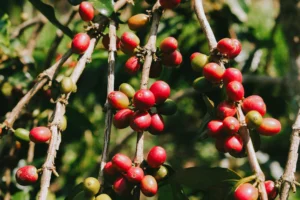
Harvest pods that have reached maturity (colour turning from green to yellow or from red to orange). Use a sharp pruning hook so as not to damage the flower cushion that will produce future pods. Frequency: every 2 to 3 weeks during production peaks.
Pod opening
Open the pods with a wooden club (never with a machete, which damages the beans) on the day of harvest or within 48 hours at most. Extract the beans in their mucilage, removing the central placenta.
Fermentation
Place the fresh beans in heaps on banana leaves, or better still in wooden fermentation boxes (2 boxes of 60 × 60 × 60 cm are enough for 100 kg of fresh beans). Turn the beans every 48 hours. Total duration: 6 to 7 days. Fermentation develops the flavour precursors that give cocoa its commercial value.

Drying
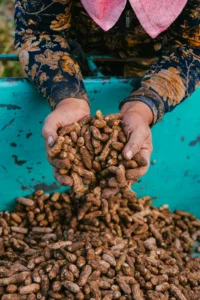
Spread the fermented beans in a 5 cm layer on raised racks in the sun. Turn 4 to 6 times a day. Bring them in at night and in damp weather. Duration: 6 to 10 days depending on sunshine. Dry beans must contain less than 7% moisture (hand test: they crack between the teeth).
Sorting and bagging
Remove germinated, insect-damaged, flat or broken beans. Bag in 65 kg jute sacks, stored on pallets in a dry, ventilated store, away from direct light.
Yield and economic analysis
For a 1-hectare cocoa farm planted with SNK hybrids, under intensive management with fertilisation and crop protection, here are the indicative projections:
| Year | Yield (kg/ha) | Gross revenue (FCFA)* | Operating costs (FCFA) | Net margin (FCFA) |
|---|---|---|---|---|
| Year 0 (establishment) | 0 | 0 | 750,000 | -750,000 |
| Year 1 | 0 | 0 | 180,000 | -180,000 |
| Year 2 | 0 | 0 | 220,000 | -220,000 |
| Year 3 | 250 | 625,000 | 280,000 | +345,000 |
| Year 4 | 700 | 1,750,000 | 380,000 | +1,370,000 |
| Year 5 | 1,200 | 3,000,000 | 450,000 | +2,550,000 |
| Years 6-25 (average) | 1,800 | 4,500,000 | 550,000 | +3,950,000 |
* Average price used: 2,500 FCFA/kg (a cautious basis; 2024-2026 prices exceeded 3,500 FCFA/kg).
Full payback is reached at the end of the 4th year. Over 25 years of operation, the financial return of a well-managed hectare exceeds 80 million FCFA in cumulative net margin, not counting the asset value of the plantation.
Markets and prices in 2026
The Cameroonian cocoa market is shaped by several players:
- SIC-Cacao (Société Industrielle Camerounaise des Cacaos): the leading local processor, buying cocoa to make liquor, butter and powder for export.
- Private exporters (Telcar Cocoa, Olam, Barry Callebaut Cameroun, SIC-Cacao, Ndongo Essomba & Fils): buy from cooperatives and farm-gate buyers and export raw beans.
- Certified cooperatives: Konafcam, Naconafcam, etc. allow certified growers (UTZ, Rainforest Alliance, Organic) to capture quality premiums of 100 to 300 FCFA/kg above the standard price.
Farm-gate prices follow the international price but at a 30 to 40% discount (collection and transport costs, intermediaries’ margins). In 2026, the realistic range is 2,500 to 3,800 FCFA/kg for well-fermented, well-dried cocoa. Specialty cocoas (fine flavour, single-origin) can exceed 5,000 FCFA/kg through direct channels to premium chocolate makers in Europe or Asia. For reference world prices, consult data from the International Cocoa Organization (ICCO).
Certifications and quality premiums
Certifications are now a major profitability lever. There are three main routes:
- UTZ / Rainforest Alliance (merged since 2018): the most widespread certification, driven mainly by the large exporters. Average premium: 100 to 200 FCFA/kg. Standards focus on traceability, the ban on child labour and good agricultural practices.
- Fairtrade: guarantees a minimum floor price and a community development premium. A niche but stable market.
- Organic cocoa: a fast-growing premium segment. Premium: 300 to 800 FCFA/kg. Gradual conversion over 3 years, with strict standards on inputs (synthetic pesticides banned). Well suited to small family plots.
For an individual grower, joining a certified cooperative is the shortest route. For a farm of 5 hectares or more, direct certification becomes profitable and makes it possible to deal directly with exporters.
Five mistakes that wreck profitability
- Using ordinary beans instead of selected hybrids. Potential yield loss: 60%.
- Neglecting temporary shade during the first 3 years. Young cocoa trees exposed to direct sun die in large numbers or suffer a shock they never fully recover from.
- Skipping mineral fertilisation in the belief that “cocoa looks after itself”. A cocoa farm without fertiliser tops out at 400 kg/ha, compared with 1,800 kg/ha with sound fertilisation.
- Rushing fermentation. Poorly fermented cocoa is downgraded at quality control and sold 30 to 40% cheaper.
- Refusing to prune. An unpruned cocoa farm becomes impenetrable, prone to disease, and loses 40 to 50% of its productive potential after 10 years.
Frequently asked questions
What is the price of cocoa in Cameroon in 2026?
Farm-gate prices range between 2,500 and 3,800 FCFA/kg depending on quality and region. Certified growers (UTZ, Organic) earn premiums of 100 to 800 FCFA/kg above these prices.
How much does it cost to establish one hectare of cocoa?
About 750,000 to 900,000 FCFA in the first year, including labour, hybrid plants, temporary shade, holing and initial fertilisation. Full payback is reached in 4-5 years.
What are the best varieties for Cameroon?
The SNK hybrids selected by IRAD (SNK 10, 13, 16, 64, 623) are the current references: early bearing (30 months), high yields (1,500 to 2,500 kg/ha) and better tolerance to black pod than traditional varieties.
How many plants per hectare?
The recommended density is 1,333 plants/ha at a spacing of 3 m × 2.5 m. This spacing offers the best balance between production, air flow and ease of maintenance.
When should cocoa be harvested?
The main crop runs from October to January; the mid crop from April to July. Pods are harvested when fully ripe, when the colour turns from green to yellow or from red to orange.
What is the minimum area needed to make a living from cocoa?
With intensive management and firm 2026 prices, a family farm can make a decent living from 3 well-maintained hectares (net annual income of 8 to 12 million FCFA at full production).
Can I get credit to establish a cocoa farm?
Yes, mainly through the PNDP, BEAC-Cameroun, Afriland First Bank and some MINADER-approved microfinance institutions. Applications require a business plan, land security and often membership of a cooperative.
How can I get trained in cocoa farming in Cameroon?
MINADER’s regional delegations regularly run free sessions. IRAD-Nkolbisson (Yaoundé) offers technical training. Certified cooperatives support their members. Finally, regularly reading specialist resources such as JOGOO Agriculture helps you stay up to date.
Conclusion
In 2026, cocoa remains one of Cameroon’s most strategic agricultural value chains. Well managed, one hectare generates more than 3 million FCFA in annual net margin at full production. Three levers determine long-term profitability: choosing high-performing hybrid varieties, sound fertilisation, and mastering post-harvest fermentation. Growers who invest in these three areas capture the benefits of the upward cycle in world prices; those who ignore them stay trapped in poor yields.
Preparing a cocoa project in Cameroon? JOGOO Agriculture supports project developers with irrigation, fertilisation, greenhouses and inputs, from system design to production. Contact us for a tailored quote.
Sources
- International Cocoa Organization (ICCO), world statistics and reference prices
- Institut de Recherche Agricole pour le Développement (IRAD), SNK cultivars, Ebolowa trials
- Conseil interprofessionnel du cacao et du café (CICC), value chain and farm-gate prices
- FAOSTAT, national production and exports
- JOGOO Agriculture field experience, cocoa plantations in Ebolowa (Djoah/IRAD) and Haute Sanaga (Mbang)
Further reading
- Oil palm: cultivation, density and yields: the other major perennial crop of the zone, with the same logic of leaf diagnosis and potassium fertilisation.
- Coffee farming in Cameroon: robusta, arabica, yield and prices: Cameroon’s second cash crop value chain, with ONCC figures for the 2023/2024 season and densities validated by IRAD.
Related articles
Get the full guide offline. Enter your details below.