Download the technical sheet (PDF)
Ginger (Zingiber officinale Rosc.) is one of the few African crops with a clear economic case: structurally growing global demand, a rewarding price, a crop management system that needs few inputs, and moderate labour. In Côte d’Ivoire, the value chain long suffered from a lack of scientific data and organisation. Since 2019, however, a research programme led by Université Nangui Abrogoua with FIRCA (Fonds Interprofessionnel pour la Recherche et le Conseil Agricoles) has identified high-yielding varieties and improved management practices, opening the way to a more professional ginger sector.
This guide is written for growers, cooperatives and project developers who want to approach ginger farming in Côte d’Ivoire with a solid technical framework and a clear view of the commercial outlets.
1. The Ivorian ginger value chain in 2026
Grown mainly in the regions of Bongouanou (Moronou), Divo (Lôh-Djiboua), Gagnoa (Gôh), Soubré (Nawa), Tiassalé (Agnéby-Tiassa), Tanda and above all Koun-Fao, Ivorian ginger supplies both the local market (cooking, the traditional drink nyamacoudji, herbal medicine, cosmetics) and an emerging export market.
In 2023, value chain stakeholders came together as an Interprofessional Agricultural Organisation (OIA-Gingembre), with support from FIRCA. This gradual organisation is a strong signal: growers who commit today benefit from a supportive institutional environment and easier access to research, advisory services and certified markets (HACCP, ISO 22000, organic).
2. Botany and plant physiology
- Species: Zingiber officinale Roscoe, family Zingiberaceae.
- Origin: Southeast Asia, with ancient worldwide spread.
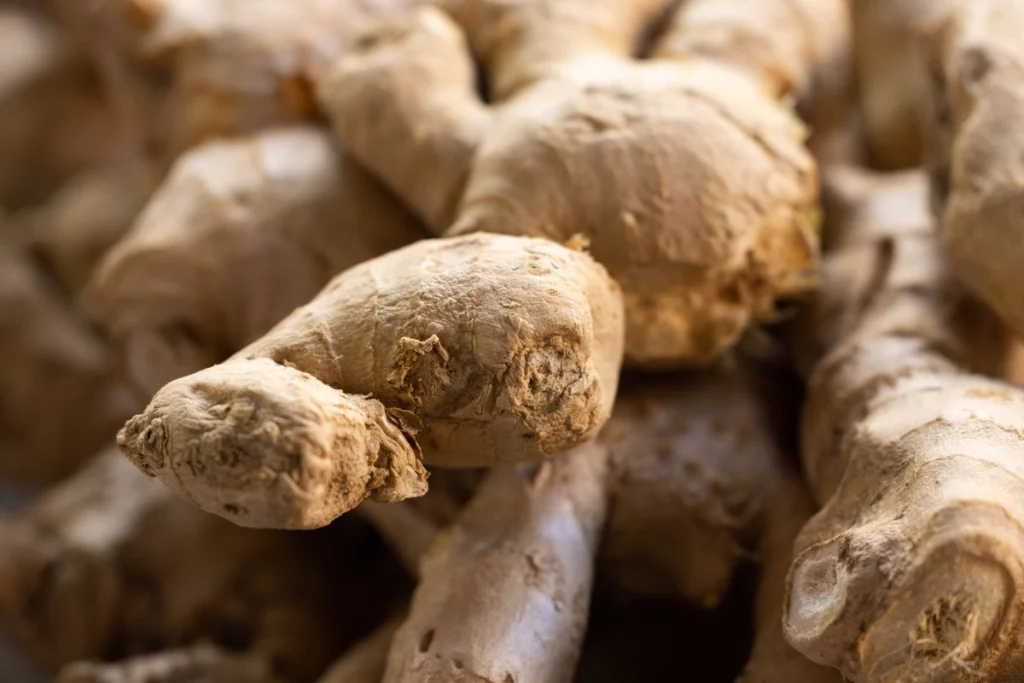
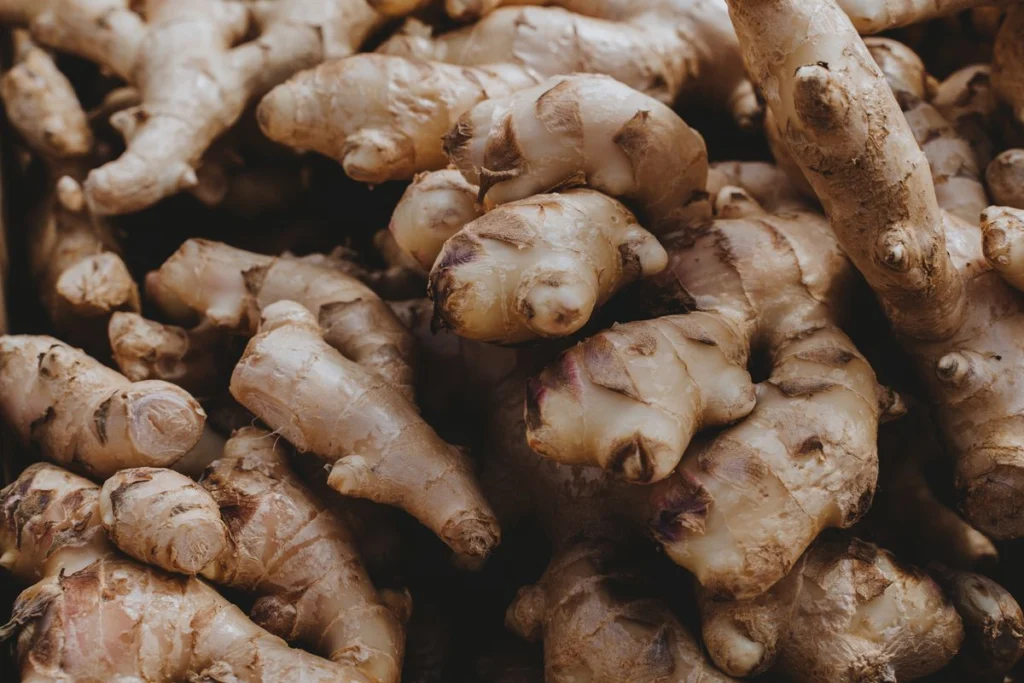
- Harvested organ: the rhizome (often wrongly called the “root”), rich in essential oils (gingerol, shogaol), starch and fibre.
- Propagation: asexual, from rhizome pieces, the botanical equivalent of cassava stem cuttings.
Cultivated varieties:
- Common ginger (Z. officinale, classic type): the most widespread variety in West Africa.
- Large ginger (Z. officinale var. rubens): bigger rhizome, higher yield, yellower flesh.
- Turmeric (Curcuma longa): a botanical cousin, sometimes loosely called “red-yellow ginger”, covered separately.
The 2019 to 2025 work by FIRCA / UNA selected several high-yielding varieties suited to Ivorian soil and climate conditions. Contact FIRCA or CNRA for access to this improved planting material.
3. Choosing the plot
Ideal soil:
- Sandy loam to clay loam textures, loose and deep.
- Slightly acidic to neutral pH (5.5 to 6.8).
- Well drained: ginger cannot tolerate excess water, which quickly causes rhizome rot.
- Rich in organic matter: aim for at least 2% OM.
Climate:
- Annual rainfall of 1,200 to 2,000 mm, well distributed.
- Temperature of 22 to 32 °C.
- Partial shade is welcome (30 to 50%): ginger naturally grows in light woodland. It is an excellent candidate for intercropping under young cocoa, oil palm or rubber before canopy closure.
Previous crop: avoid any recent Zingiberaceae or solanaceous crop. An improved fallow, a legume or a cereal are good preceding crops.
4. Land preparation and planting
4.1 Preparation
- Deep ploughing at the end of the dry season: 25 to 30 cm.
- Organic matter: 5 to 10 t/ha of mature compost or well-rotted manure, worked in during ploughing.
- Build ridges 30 cm high or raised beds: essential for drainage.
4.2 Selecting rhizome pieces
- Mother rhizomes that are firm and healthy, with no necrosis or rot.
- Weight per piece: 30 to 50 g, with at least 2 to 3 visible buds (“eyes”).
- Preventive treatment (optional but recommended): dip in an approved fungicide solution for 15 minutes before planting, then dry in the shade.
4.3 Density and planting
- Spacing: 30 to 40 cm between plants in the row, 40 to 60 cm between rows.
- Density: about 60,000 to 80,000 pieces/ha.
- Depth: 5 to 10 cm.
- Planting window: at the start of the rainy season (March to April in the Ivorian forest zone).
5. Fertilisation and field care
5.1 Fertilisation
Ginger has moderate mineral nutrient needs but a strong demand for organic matter.
- Basal dressing: 5 to 10 t/ha of compost at land preparation.
- First mineral application at the first weeding (30 days after planting): NPK 15-15-15 at 200 to 300 kg/ha.
- Second application at 3 months: urea at 50 to 100 kg/ha + KCl at 100 kg/ha to support rhizome formation.
- Foliar feeding as needed: consider it when micronutrient deficiencies are visible.
Our range of farm supplies and inputs includes suitable formulations.
5.2 Mulching
Mulching is probably the most profitable practice in ginger farming. It:
- conserves soil moisture,
- greatly reduces weeds,
- keeps root-zone temperature stable,
- returns organic matter to the soil.
Mulch with crop residues (rice straw, banana leaves, dry grass) to a depth of 5 to 10 cm as soon as shoots emerge.
5.3 Weeding and earthing up
- First weeding: at emergence (30 days).
- Second weeding + earthing up: at 60 to 90 days. Earthing up protects developing rhizomes and stops them from surfacing (a green rhizome loses commercial quality).
- Further weeding depending on weed pressure.
5.4 Pests and diseases
The main threats:
- Bacterial rhizome rot (Ralstonia solanacearum): devastating. Prevention means flawless drainage, healthy mother rhizomes and rotation.
- Soil-borne fungi (Fusarium, Pythium): wilting symptoms. A recent Ivorian study of fungal pathogens of ginger in production areas identified several species to monitor.
- Nematodes: hidden root damage. Rotation and organic amendments help prevent it.
- Pests: occasional leaf pests, generally of little consequence.
6. Harvest, drying and processing
6.1 Harvest
- Harvest at about 8 months: young, tender, highly aromatic rhizome for the fresh and juice markets.
- Harvest at 9 to 12 months: mature rhizome, more fibrous, with maximum essential oil content, for dried ginger and powder.
Indicator: yellowing and drying of the foliage.
Expected yield:
- Traditional: 8 to 12 t/ha of fresh rhizome.
- Improved (FIRCA/UNA varieties, full management package): 15 to 25 t/ha, or even more in trials.
Fresh to dry ratio: 15 to 25%, meaning one kg of fresh ginger gives 150 to 250 g of dried ginger.
6.2 Post-harvest
- Washing carefully in clean water, with brushing.
- Quick blanching to remove the outer layer and fix the colour (optional, depending on the market).
- Slicing into 3 to 5 mm strips.
- Drying: in the sun on racks or in a controlled dryer (60 °C max) down to residual moisture of about 10%.
- Packaging: airtight bags, vacuum bags or cartons for export.
Markets:
- Fresh, local: urban markets, restaurants, beverages, bakery, confectionery.
- Dried / powder: food manufacturers, cosmetics, traditional medicine.
- Essential oil: yield of 1.25 to 1.67%, a high-value chain if volumes are sufficient.
- Export: Europe, the Middle East, organic and fair trade markets.
7. Economics and project opportunity
Ginger is now one of the African crops with a high margin per hectare, thanks to:
- moderate variable costs (compared with greenhouse vegetables, for example),
- fast returns from the first year of production,
- diverse outlets (fresh, dried, powder, essential oil),
- an Ivorian value chain organised since 2023 through OIA-Gingembre.
Indicative range for one hectare (based on 15 t/ha fresh and an average farm-gate price): costs of 700,000 to 1,200,000 FCFA, revenue of 1,500,000 to 3,500,000 FCFA, net margin of 500,000 to 2,000,000 FCFA/ha, highly variable depending on the season’s price and the marketing channel.
These figures need to be refined with rigorous costing at the scale of your project. That is exactly what our turnkey agricultural projects and agricultural consulting and engineering teams support: from the feasibility study, variety choice and market analysis through to sizing the processing unit and export certification.
Sources and references
- FIRCA. Côte d’Ivoire : les acteurs de la filière gingembre se constituent en Organisation Interprofessionnelle Agricole.
- AIP / UNA / FIRCA (2025). Des variétés à haut rendement identifiées pour transformer la filière gingembre en Côte d’Ivoire.
- Agribusiness Data Lab. Filière Gingembre, données comparées Togo / CI.
- Inter-réseaux. Les défis du gingembre en Côte d’Ivoire.
- Fungal pathogenicity studies on Zingiber officinale in two Ivorian production areas (recent research).
Article written by the JOGOO Agriculture agronomy team. Economic data are indicative as of the date of writing and must be adapted to your soil and climate, your area and your marketing channel.
Frequently asked questions
Where is ginger grown in Côte d’Ivoire?
Ginger is grown mainly in the regions of Bongouanou (Moronou), Divo (Lôh-Djiboua), Gagnoa (Gôh), Soubré (Nawa), Tiassalé (Agnéby-Tiassa), Tanda and above all Koun-Fao. Since 2023, the value chain has been organised as an Interprofessional Agricultural Organisation (OIA-Gingembre) with support from FIRCA.
How do you plant ginger?
Ginger is planted from rhizome pieces of 30 to 50 g carrying 2 to 3 buds, at a depth of 5 to 10 cm, on ridges or raised beds. Density is 60,000 to 80,000 pieces per hectare, with 30 to 40 cm between plants and 40 to 60 cm between rows. Planting takes place at the start of the rainy season (March to April in the Ivorian forest zone).
What ginger yield per hectare can you expect?
Under traditional practice, ginger yields 8 to 12 tonnes of fresh rhizome per hectare. With the high-yielding varieties identified by the FIRCA/UNA 2019 to 2025 programme and a full management package, yields reach 15 to 25 t/ha. The fresh to dry ratio is 15 to 25%.
How long does a ginger crop take?
A ginger crop takes 8 to 12 months depending on the target market. Harvesting at 8 months gives a young, tender, highly aromatic rhizome for the fresh and juice markets. Harvesting at 9 to 12 months gives a mature, more fibrous rhizome with maximum essential oil content, for dried ginger and powder.
How do you dry ginger after harvest?
Ginger is dried after careful washing, brushing and slicing into 3 to 5 mm strips. Drying is done in the sun on racks or in a controlled dryer at 60 °C maximum, down to residual moisture of about 10%. Final packaging is in airtight or vacuum bags to preserve the aroma and allow export.
Further reading
In the dry season or in areas with irregular rainfall, mulching works best combined with a drip irrigation system. Sizing guidelines, the number of laterals per bed, emitter spacing, filtration and the watering schedule are covered in our guide to installing drip irrigation on a ginger plot.
Related articles


Get the full guide offline. Enter your details below.