
Download the technical sheet (PDF)
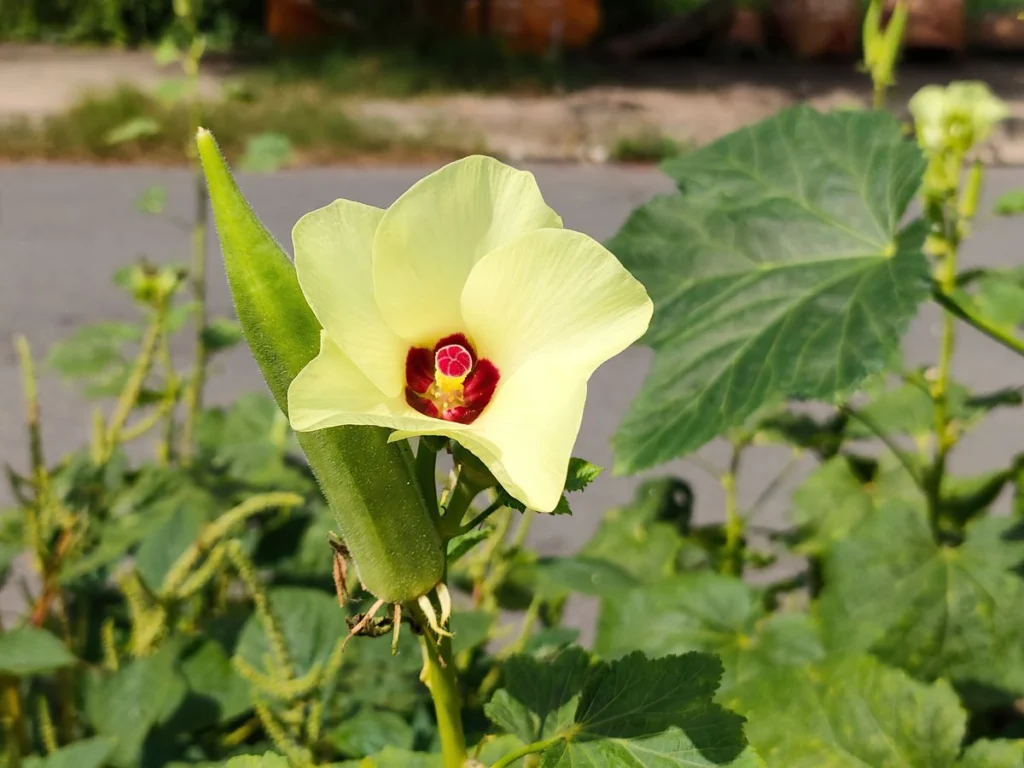
Okra (Abelmoschus esculentus),known as ladies’ fingers in the UK, gombo across francophone Africa, ochro in the Caribbean, and bhindi in India, is one of the most productive warm-season vegetables you can plant. It thrives in heat that stops tomatoes and peppers cold, and a healthy plant keeps producing pods for months on end. From the American South (where it defines gumbo) to Nigeria and Cameroon (where it is a staple across dozens of national dishes) to the greenhouses of southern Europe, the same principles apply. Here is how to grow okra successfully in 2026.
1. Know your plant
- Family: Malvaceae (same as cotton, hibiscus and cocoa).
- Origin: most likely East Africa, spread across the tropics through ancient trade.
- Cycle: 50 to 65 days from sowing to first harvest, then continuous production for 8 to 16 weeks.
- Climate: hot weather crop, thrives at 25 to 35 °C. Slows sharply below 18 °C. Frost-intolerant.
- Height: 1 to 2.5 m depending on variety.
- Yield potential: 8 to 15 tonnes per hectare in traditional systems, up to 25 t/ha in intensive market gardening.
2. Choose your variety
Broadly two categories:
Green-fruited varieties
- Clemson Spineless: US and international classic. Reliable, low-spine, good for market.
- Emerald: dark green, tender pods, popular in the American South.
- Perkins Long Pod: high yields, longer pods.
- Volta and Kirikou: adapted African varieties selected by INRAB (Benin) and partner institutes.
Red or burgundy varieties
- Burgundy (US) and Red Velvet: novelty market appeal, same culinary use.
Dwarf varieties
For containers or small gardens: Baby Bubba, Cajun Delight, growing to 90–120 cm.
For African growers: the traditional locally-adapted varieties often outperform imported hybrids on drought tolerance and pest resistance. Do not automatically switch to imports, consult with your local research station.
3. When to plant okra
Temperate climate
- Plant only after all frost danger has passed and soil temperature reaches at least 18 °C (65 °F).
- In the US South: mid-April to May.
- In the US Midwest and Northeast: late May to mid-June.
- In UK and northern Europe: only under polytunnels or greenhouses; direct sow late May, expect a shorter productive season.
Tropical climate
- West Africa (Nigeria, Ghana, Cameroon, Ivory Coast): plant at the start of the rainy season, April to June in the south, May to July further north. A second short cycle is often possible in September if rains extend.
- East and Southern Africa: plant with the onset of the main rainy season.
- Irrigated production: possible year-round in the tropics with adequate water.
4. Prepare the soil
- Soil type: well-drained sandy loam to loam. Okra tolerates a wider soil range than most vegetables but hates waterlogging.
- pH: 6.0 to 7.5. Slightly alkaline is fine.
- Full sun: essential. Okra needs 6 to 8 hours of direct sunlight daily.
- Fertility: work in 5 to 10 tonnes per hectare of well-rotted compost or manure before planting.
5. Sowing and planting
Seed treatment
Okra seeds have a hard coat. To speed germination:
- Soak seeds in room-temperature water for 12 to 24 hours before sowing, or
- Nick each seed with a nail clipper (only if you have patience, soaking is easier).
Direct sowing
- Depth: 1 to 2 cm.
- Spacing: 30 to 45 cm between plants within the row, 90 to 120 cm between rows.
- Sowing rate: 2 to 3 seeds per hole, thin to the strongest seedling after emergence.
- Density: 25,000 to 40,000 plants per hectare depending on variety.
- Germination: 5 to 10 days at 25 to 30 °C soil temperature.
Transplanting
Okra has a taproot and dislikes transplanting. If starting indoors (necessary in short-season climates), use biodegradable pots and transplant while young, before the fourth true leaf.
6. Care during growth
Watering
Okra tolerates drought better than most vegetables but yields substantially more with consistent moisture. Aim for 25 to 40 mm per week. Drip irrigation is ideal,drip irrigation systems deliver water to the root zone without wetting foliage.
Fertilization
- At planting: 200 to 300 kg per hectare of NPK 15-15-15.
- First side-dressing at 4 to 5 weeks (when plants start flowering): 100 to 150 kg per hectare of urea (46 % N) plus 100 kg per hectare of KCl.
- Repeat a lighter dose every 4 to 6 weeks during the harvest season.
- Foliar micronutrient sprays (containing boron and zinc) during flowering can significantly boost pod set, a foliar formulation such as AgriBiosol supports this.
Mulching
Apply a 5 to 10 cm layer of organic mulch (straw, dry grass, leaves) once plants are 20 cm tall. Mulch retains moisture, suppresses weeds, and keeps soil temperature stable, particularly valuable in Sahelian zones with intense sun.
Pests and diseases
- Aphids: distort young leaves and transmit viruses. Wash off with strong water spray or use neem-based sprays.
- Flea beetles: cause shot-hole damage on leaves. Row covers protect young plants.
- Cotton bollworm and okra fruit borer: pierce the pods. Monitor with pheromone traps; if pressure is high, use Bacillus thuringiensis (Bt),same active used against fall armyworm.
- Root-knot nematodes: cause galls on roots and stunt plants. Rotate with marigold or non-host crops.
- Fusarium wilt: soilborne. Rotate 3+ years away from okra and cotton on the same plot.
- Yellow vein mosaic virus (YVMV): whitefly-transmitted, devastating in South Asia and parts of Africa. Plant resistant varieties, control whiteflies.
7. Harvest
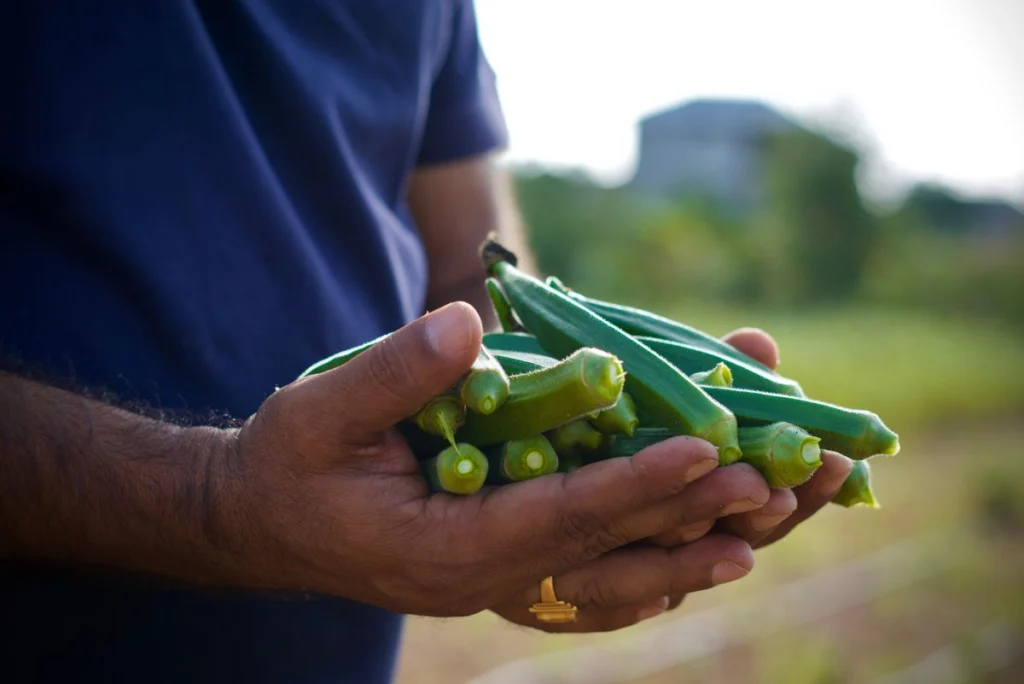
This is where many first-time growers make the critical mistake: okra pods toughen fast. Harvest technique determines yield and quality more than any other factor after planting.
- First pods ready: 50 to 65 days after sowing.
- Harvest size: 5 to 10 cm long depending on variety. Slightly smaller for best tenderness.
- Frequency: harvest every 2 to 3 days during peak production. Missed pods turn fibrous and shut down further flowering.
- Cut, do not pull: use scissors or a knife to snip pods with a short stem (1 to 2 cm) intact. Yanking damages the branches.
- Wear gloves and long sleeves,most varieties have fine leaf spines that irritate skin.
- Harvest window: early morning gives crisp pods with the longest shelf life.
A well-managed plant produces 50 to 150 pods over the season.
8. Post-harvest and storage
- Fresh: 3 to 5 days refrigerated at 7–10 °C and 90 % humidity. Avoid colder, chilling injury shows as dark spots.
- Freezing: blanch pods 3 minutes, cool in ice water, drain and freeze whole or sliced. Keeps 8 to 12 months.
- Drying: slice thin, sun-dry or dehydrate at 55 °C until brittle. Store in airtight containers, used across West Africa in soups and stews.
9. Culinary and market notes
Okra has three major culinary traditions worth knowing as a producer:
- American South: gumbo, fried okra, pickled okra. Peak demand summer through early fall.
- West and Central Africa: sauce gombo, soupou kandia, ndolé,dozens of national dishes. Year-round strong demand; peak prices in dry season when fresh supply drops.
- India, Middle East, South Asian diaspora: bhindi preparations. Very strong demand in immigrant communities of the US, UK and Canada, often an underserved market with excellent margins for specialty growers.
Okra’s low storage life makes local production near consumer markets particularly attractive. For those planning a market gardening operation with okra as a core crop, our agricultural consulting team supports variety selection, layout design and marketing strategy.
Article by the JOGOO Agriculture agronomy team. Recommendations should be adapted to your climate, variety and locally registered inputs.
Frequently asked questions
How long does okra take to grow?
Okra produces its first pods 50 to 65 days after sowing, then continues producing for 8 to 16 weeks with frequent harvesting. A well-managed plant produces 50 to 150 pods over the season. The full crop cycle in warm climates is typically 3 to 5 months from planting to end of production.
How often should you harvest okra?
Harvest okra every 2 to 3 days during peak production. Missed pods quickly turn fibrous and inedible, and the plant shuts down further flowering. Harvest when pods reach 5 to 10 cm, smaller pods are more tender. Cut with scissors leaving a short 1-2 cm stem; do not pull pods off the plant.
Does okra come back every year?
Okra is an annual plant in all climates. Even in tropical zones without frost, plants become woody and unproductive after 4 to 5 months and are best replaced. Some growers get a modest second season by cutting plants back hard mid-season, but yields drop significantly.
Why are my okra plants tall but not producing?
Three common causes: too much nitrogen (which favors leaf growth over flowers), insufficient sunlight (okra needs 6-8 hours of direct sun), or cool soil temperatures below 18 °C which delay flowering. If fertilization has been heavy, hold back nitrogen and switch to a phosphorus-potassium blend to trigger flowering.
Can okra grow in containers?
Yes, dwarf varieties like Baby Bubba, Cajun Delight or Little Lucy grow well in containers of at least 20 liters per plant, with full sun exposure. Standard varieties can also be grown in larger 40-liter containers. Consistent watering is essential, container plants dry out quickly in hot weather.
Related articles


Get the full guide offline. Enter your details below.