
Download the technical sheet (PDF)
Aloe vera is one of the most forgiving plants you can grow, and one of the most useful. A single mature plant produces gel for skincare, first aid, cosmetics, and beverages, and the market for aloe products is projected to exceed $2 billion globally by 2027. In warm climates it will thrive in the ground with almost no care; in cooler climates it grows well indoors on a sunny windowsill. This guide covers everything from choosing the right variety to harvesting the leaves for gel, whether you are growing one plant on your kitchen counter or planning a commercial plot.
1. Choose the right variety
There are over 500 species of aloe, but only a few are grown for gel and skincare:
- Aloe barbadensis Miller (true aloe vera),the commercial standard. Thick leaves, clear gel, mild taste. This is what you want for skincare and consumption.
- Aloe arborescens,smaller, more branched, higher antioxidant content. Popular in traditional medicine.
- Aloe ferox (Cape aloe),native to southern Africa, prized for bitter sap used in pharmaceuticals.
For most home growers and small commercial operations, choose Aloe barbadensis Miller. Ninety percent of the global aloe gel market comes from this single species.
2. Climate and location
- Temperature: ideal 18 to 32 °C. Tolerates brief drops to 10 °C but is damaged below 4 °C.
- Sunlight: bright indirect light indoors; full sun or partial shade outdoors. Too much direct sun turns leaves reddish-brown; too little makes them thin and floppy.
- Rainfall: aloe hates wet feet. In areas with over 800 mm annual rainfall, plant on raised beds or slopes.
- Frost: not tolerated. In frost-prone areas, grow in pots and bring indoors during winter.
3. Soil requirements
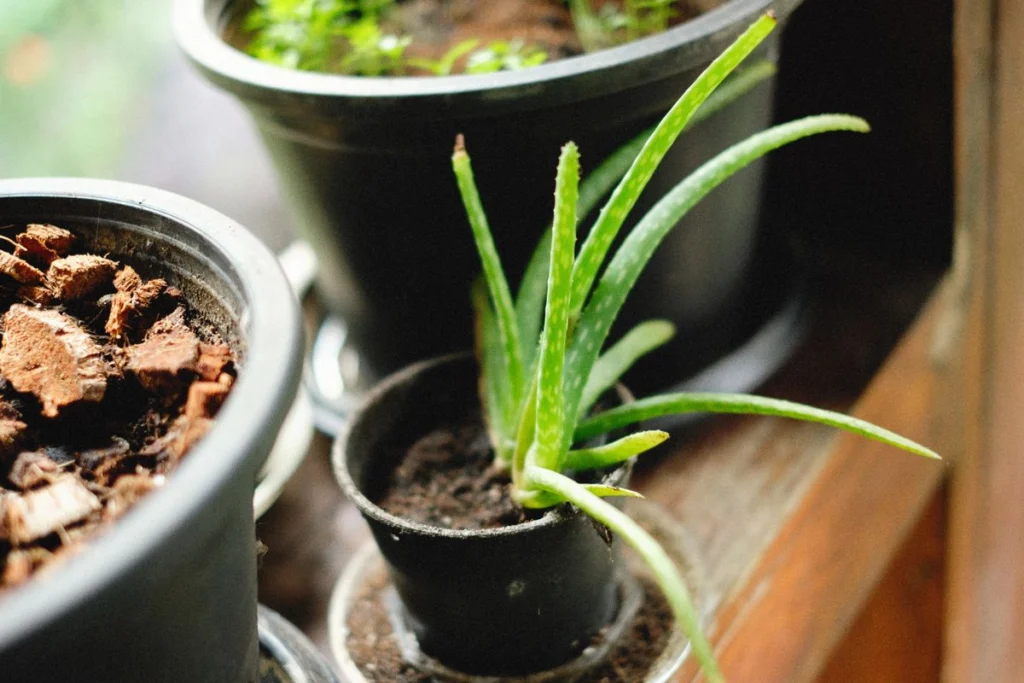
Aloe vera needs sharp drainage above all else. Waterlogged roots are the number one killer.
Ideal soil mix (for pots)
- 50 % coarse sand or perlite
- 30 % compost or good garden soil
- 20 % coco coir or peat
Alternatively, buy a pre-mixed cactus and succulent potting mix.
For outdoor beds
- pH: 6.0 to 7.5 (aloe tolerates slightly alkaline soils).
- Amend heavy clay soils with coarse sand and compost.
- Raised beds 20 to 30 cm high are ideal in high-rainfall zones.
4. How to plant aloe vera
From an offset (pup),most common method
Mature aloe plants produce baby plants (pups) around the base. This is the fastest way to propagate.
- Wait until the pup is at least 8 to 10 cm tall with its own roots.
- Water the parent plant lightly the day before.
- Unpot or dig around the parent; gently separate the pup, keeping as many roots as possible.
- Let the cut surface callus over for 24 to 48 hours in a shaded, dry spot, this prevents rot.
- Plant in prepared soil, firm gently, and place in bright indirect light.
- Do not water for one week. This is critical.
From a leaf cutting
Unlike many succulents, aloe rarely roots from leaf cuttings. Skip this method, use pups.
From seed
Possible but slow, 3 to 4 years to a harvestable plant. Only worthwhile for specialty growers.
5. Watering
The most common mistake with aloe vera is overwatering.
- Indoor plants: water thoroughly, then let the top 5 to 8 cm of soil dry completely before watering again. In practice, this is every 2 to 3 weeks in most homes.
- Outdoor plants: in dry season, water deeply every 10 to 14 days. In wet season, no watering needed.
- Winter dormancy: reduce watering by half.
- Always water at the base, not the leaves.
Sign of overwatering: soft, mushy, yellowing leaves. Sign of underwatering: wrinkled, thin, curled leaves (recoverable).

6. Fertilization
Aloe is a low-feeder. Overfertilization causes weak, watery leaves with less concentrated gel.
- Apply a balanced liquid fertilizer (like NPK 10-10-10) diluted to half strength, once every 2 to 3 months during the growing season.
- For commercial plots, an initial application of well-rotted compost or manure (10 to 15 tonnes/ha) at planting is usually enough for the first year.
- Foliar sprays work well when leaves start to yellow slightly. Our plant nutrition service can help design a foliar programme.
7. Common problems and how to fix them
| Problem | Cause | Fix |
|---|---|---|
| Leaves turning brown or red | Sunburn | Move to partial shade |
| Leaves soft, yellow, mushy | Overwatering, root rot | Stop watering, repot in dry mix |
| Thin, curling leaves | Underwatering | Water deeply, then wait |
| Weak, floppy growth | Not enough light | Move to brighter spot |
| White cottony masses | Mealybugs | Wipe with alcohol-soaked cotton |
| Black spots on leaves | Fungal infection from wetness | Improve air flow, avoid wetting leaves |
8. How to harvest aloe vera
Wait until your plant is at least 8 months old and has thick, mature outer leaves (usually 20 cm or longer).
- Select the oldest, thickest outer leaves.
- Cut close to the base with a clean knife, at an angle.
- Never harvest more than one-third of the plant at once.
- Let the cut leaf stand upright in a bowl for 10 to 15 minutes so the yellow latex drains, this latex can irritate skin and stomach.
- Slice off the spiny edges, then the flat green skin. Scoop the clear inner gel with a spoon.
- Use fresh, or blend and refrigerate up to 7 days. For longer storage, freeze in ice cube trays.
9. Commercial cultivation basics
Aloe is one of the highest-margin low-input crops in dry tropical regions:
- Spacing: 60 cm within rows, 100 cm between rows, around 16,000 plants per hectare.
- Time to first harvest: 18 to 24 months from planting pups.
- Yield: mature plot produces 40 to 60 tonnes of fresh leaves per hectare per year.
- Irrigation: drip irrigation is ideal, cheap, water-saving, prevents leaf wetting. Our team can advise on irrigation systems suited to your plot size.
- Markets: fresh leaves, gel processors, cosmetic manufacturers, juice makers. Certification (organic, ISO) unlocks premium export markets.
Aloe pairs well in a smallholder crop rotation with drought-hardy crops like okra and garlic, both of which share aloe’s low water needs.
10. Commercial and medicinal uses of aloe vera
Aloe vera has one of the widest utility profiles of any plant in commercial cultivation. Understanding which market you’re growing for shapes variety choice, harvest schedule, and post-harvest handling.
Skincare and cosmetics (largest market)
Around 60% of global aloe vera production flows into cosmetics and skincare, moisturizers, sunburn gels, anti-aging serums, hair conditioners, and shampoos. Buyers want fresh gel with high polysaccharide content (specifically acemannan) and stable colour. Post-harvest processing needs to be fast: gel oxidizes and darkens within hours of leaf harvest, so smallholder growers typically sell fresh leaves to nearby processors within 24 hours rather than trying to extract gel themselves.
Beverages and functional food
Aloe vera juice and gel are added to bottled drinks, kombucha, energy waters, and health supplements. Food-grade aloe requires careful removal of the yellow latex (aloin) just under the skin, which is a laxative and regulated in many countries. Commercial food-grade processing lines flush the gel with water and pass it through decolorization filters to remove residual aloin.
Traditional and evidence-based medicine
Aloe has documented use in wound healing (particularly first-degree burns), constipation relief (via aloin), and diabetes management. Modern clinical research shows moderate evidence for topical wound care and mucositis treatment; oral use for other conditions is less well supported. For growers, the medicinal market is smaller than cosmetics but pays premium prices for organically certified material.
Ornamental market
Aloe vera pups sell well as potted houseplants in urban markets across Africa and worldwide. Retail prices in Douala and Abidjan for a 20-25 cm potted aloe range from 1,500 to 3,500 FCFA, giving a very high margin over production cost.
11. Aloe vera in a diversified farm plan
Because aloe requires minimal water, no shade, and few inputs, it makes an excellent perimeter or border crop on a diversified farm. A common Cameroon smallholder pattern is a 200-plant border along a fenceline, generating supplementary income while acting as a natural barrier to browsing animals. Combining aloe with drought-tolerant crops like okra, garlic, and sweet potatoes spreads climatic and market risk while keeping the water and labor requirements low across the whole farm.
Article by the JOGOO Agriculture team. Cultivation data are typical values for tropical and subtropical climates and should be adapted to your specific microclimate.
Frequently asked questions
How long does it take to grow aloe vera?
From a pup (offset), aloe vera takes about 8 to 12 months to reach a harvestable size for occasional use. Full maturity, thick, foot-long leaves suitable for commercial harvest, takes 18 to 24 months. From seed, expect 3 to 4 years, which is why almost all aloe vera is propagated from pups.
How often should I water my aloe vera plant?
Indoor aloe vera plants need watering every 2 to 3 weeks, always let the top 5 to 8 cm of soil dry completely first. Outdoor plants need watering every 10 to 14 days during dry season, and no watering at all during rainy season. Overwatering is the most common way people kill aloe.
Can aloe vera grow in full sun?
Aloe vera tolerates full sun but grows best in bright indirect light or partial shade. Direct all-day tropical sun can scorch leaves and turn them reddish-brown. Indoors, a south or east-facing windowsill is ideal. For outdoor plots in hot climates, provide 30 to 40 percent shade during peak afternoon hours.
Why is my aloe vera turning brown?
Brown or reddish leaves usually mean sunburn, move the plant to partial shade. If leaves are brown AND soft or mushy, the cause is overwatering and root rot; stop watering, remove the plant, cut off rotten roots, and repot in a well-draining cactus mix. Brown leaf tips alone can indicate underwatering.
Is aloe vera profitable to grow commercially?
Yes, aloe vera is one of the highest-margin low-input crops in dry tropical climates. A mature hectare produces 40 to 60 tonnes of fresh leaves per year with minimal water and fertilizer. Global demand from the cosmetics, skincare, and beverage sectors continues to grow, and organic certification unlocks premium export markets in the US and EU.
Related articles

Get the full guide offline. Enter your details below.