The oil palm (Elaeis guineensis) originates from the Gulf of Guinea and remains one of the backbone value chains of agriculture in Cameroon and Côte d’Ivoire. It is the most productive oil crop in the world: a well-managed hectare delivers 10 to 25 tonnes of fresh fruit bunches a year, several times the oil yield of a hectare of soybean or rapeseed. A plantation comes into bearing at around 3 to 4 years, reaches its full potential between 8 and 15 years and remains productive for 25 to 30 years.
Ecological requirements
The oil palm needs heat, water and light, with no pronounced dry season.
| Factor | Optimum |
|---|---|
| Rainfall | 1,800 to 2,000 mm per year, evenly distributed |
| Temperature | 24 to 30 °C |
| Altitude | Below 500 m |
| Sunshine | At least 5 hours per day |
| Soil | Deep, well drained, pH 4.5 to 6.5 |
A water deficit lasting more than 3 months causes inflorescences to abort, and the cost shows up in the harvest 2 years later. This is the main reason some plantations underperform for years without any visible immediate cause.
Choosing planting material
The reference material is the tenera hybrid, from a cross between the dura and pisifera types. Its thin shell significantly increases the oil extraction rate compared with dura. Seed must come from an approved seed centre.
This is where projects fail most often. A plantation established from ordinary seed collected from village palms produces mostly thick-shelled dura. The mistake only becomes apparent after 4 years, when replanting costs as much as the original project.
Nursery
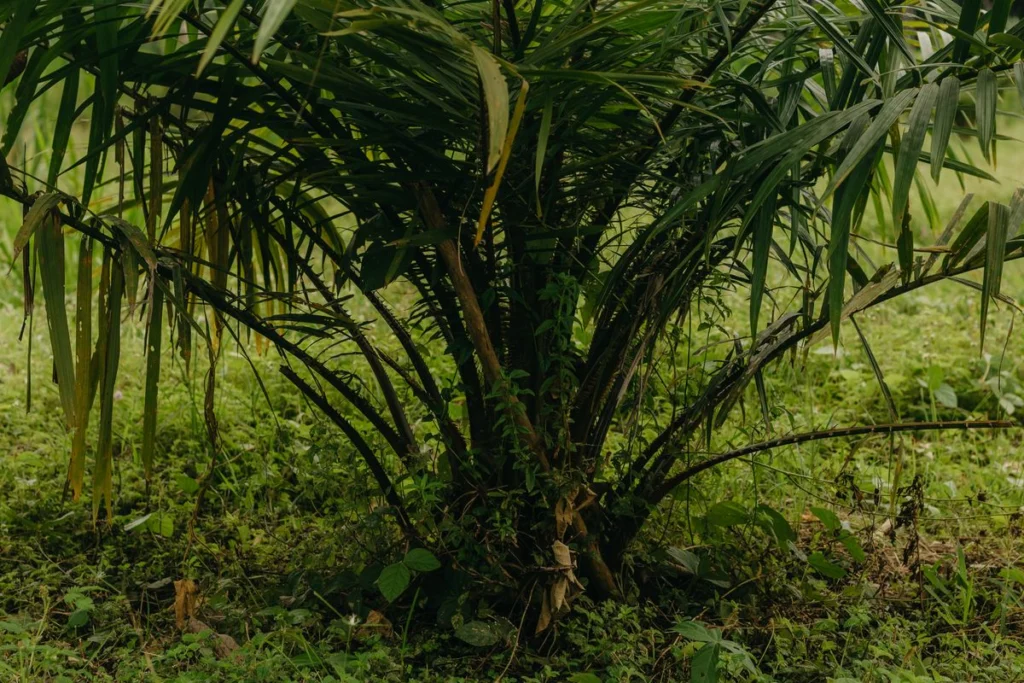
The standard approach has two phases. The pre-nursery lasts about 3 months, in small polybags under shade netting, at high density. The main nursery lasts 9 to 12 months, in large polybags spaced 60 to 90 cm apart, with daily watering in the dry season.
Strict culling is essential at each transfer. Stunted seedlings, with narrow leaflets or abnormal upright growth, will never catch up, yet they would occupy a place in the field for 25 years. Discarding 15 to 25 % of seedlings in the nursery is normal.
Density and field planting
The reference density is 143 palms per hectare, in an equilateral triangle with 9 metre sides. This layout maximises light interception and avoids competition between crowns at maturity.
Plant at the start of the rainy season, in holes measuring 60 x 60 x 60 cm, keeping the collar at ground level. Planting too densely makes palms grow taller in search of light, complicates harvesting and lowers yield per palm without making up for it in numbers.
Cover crop and maintenance
Establishing a leguminous cover crop at planting is standard practice in oil palm plantations. It limits erosion on young bare plots, controls weeds and fixes nitrogen. Routine maintenance includes keeping clean weeded circles around each palm, slashing the inter-rows and pruning dry fronds.
As with cocoa farming, the other major perennial crop in the zone, oil palm fertilisation is heavily potassium-based. It is planned from leaf analysis, the only reliable tool for adjusting applications on a perennial crop. Our teams support this monitoring through our fertilisation and plant nutrition services.
Coming into bearing and harvest
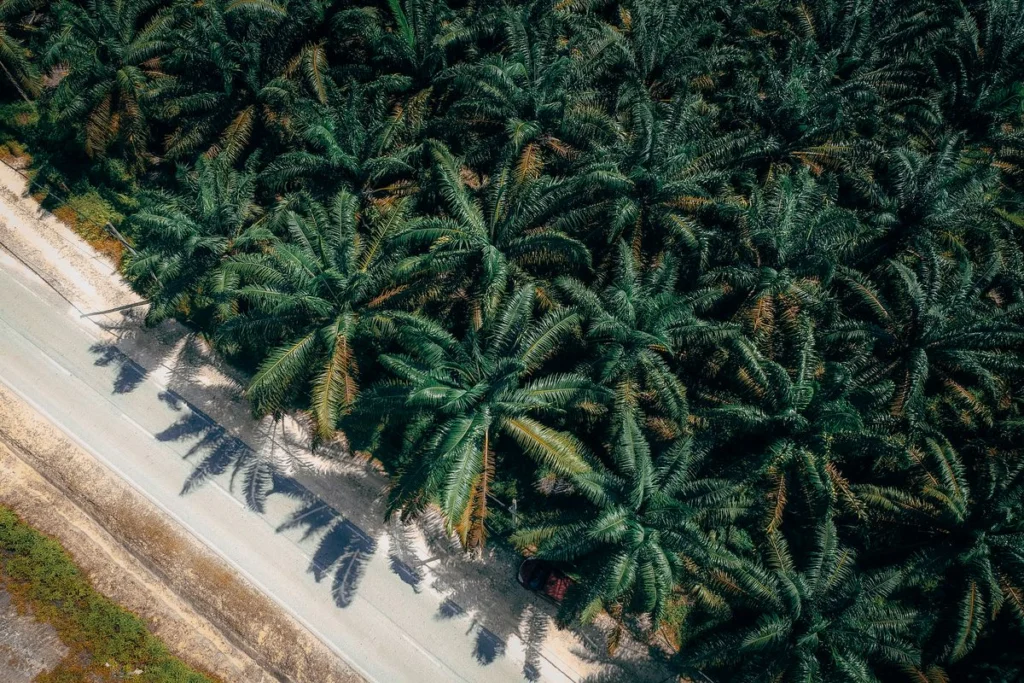
The first bunches appear at around 30 to 36 months. The very first inflorescences are removed so the plant can build up its vegetative reserves, a practice that improves productivity in the following years.
Harvesting takes place year round, in rounds every 10 to 15 days. The ripeness criterion is a few fruits dropping naturally at the foot of the palm. A bunch harvested too early gives little oil; an overripe bunch sees its acidity rise and loses value at the mill. The time between cutting and pressing must stay under 48 hours.
Yields and plantation life cycle
| Plantation age | Production |
|---|---|
| 0 to 3 years | Unproductive, investment phase |
| 4 to 7 years | Gradual increase in production |
| 8 to 15 years | Full yield, 10 to 25 t of bunches/ha/year |
| 16 to 25 years | Sustained production, harder harvesting |
| Over 25 years | Excessive height, replanting to be considered |
The palm oil extraction rate is commonly between 20 and 25 % of bunch weight for tenera material that is properly harvested and processed.
Frequently asked questions
How long does an oil palm take to start producing?
The first bunches appear around 3 to 4 years after field planting. Full yield is reached between 8 and 15 years.
How many oil palms should you plant per hectare?
143 palms per hectare, in an equilateral triangle with 9 metre sides.
What is the difference between dura, tenera and pisifera?
Dura has a thick shell and a low oil content, pisifera is usually female sterile, and tenera, a cross between the two, combines a thin shell with good yield. Tenera is the only material recommended for commercial plantations.
How long does an oil palm plantation last?
25 to 30 years of production. Beyond that, the height of the palms makes harvesting too costly and replanting becomes more profitable.
Planning to establish or rehabilitate an oil palm plantation? We work from the feasibility study through to agronomic follow-up. Discover our turnkey projects.