Agriculture in Côte d’Ivoire: cocoa, cashew and food crops in 2026
Agriculture remains the beating heart of the Ivorian economy. It accounts for 14.8% of GDP in 2024, employs 46% of the workforce and made up 51.5% of the country’s exports in 2025, according to the French Treasury (Direction générale du Trésor). The world’s leading producer of cocoa (39% market share in 2024) and of cashew nuts (about 40% of world output), Côte d’Ivoire is also the world’s third largest producer of natural rubber. This article gives a full picture of the value chains, challenges and outlook for the sector in 2026.
An agricultural sector that drives the Ivorian economy
Since 2012, the Ivorian economy has followed a path of sustained growth, with agriculture as its foundation. In 2024, the primary sector, dominated by agriculture, accounted for 14.8% of GDP, against 23.7% for industry and 61.6% for services. World commodity prices gave the sector a strong boost in 2024: cocoa +145%, coffee +63%, cashew nuts +17.3%, gold +31%, helping to cut the current account deficit from 8.2% to 4.2% of GDP (DG Trésor, 2025).
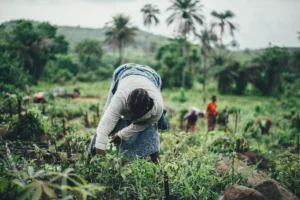
Even so, agriculture remains a two-speed sector. Export crops (cocoa, coffee, cashew, rubber, oil palm, banana) are well organised and generate most of the revenue. Food crops (rice, cassava, yam, plantain, vegetables) are less organised and do not yet secure food self-sufficiency, a goal set for 2030.
Exceptional agro-ecological potential
Côte d’Ivoire has 24 million hectares of arable land and a climate spanning three main agro-ecological zones:
- Southern forest zone (South, South-West, East): cocoa, coffee, rubber, oil palm, banana. Two rainy seasons.
- Transition zone (humid savanna) in the Centre: cashew, cotton, maize, yam, cassava, upland rice.
- Sudanian zone in the North: cashew, cotton, millet, sorghum.
This diversity places Côte d’Ivoire among the top three African producers of banana, rubber and oil palm, on top of its leadership in cocoa and cashew.
For orchard management, see our guide to cashew farming in Côte d’Ivoire.
The main export value chains
Cocoa: historic engine, fragile pillar
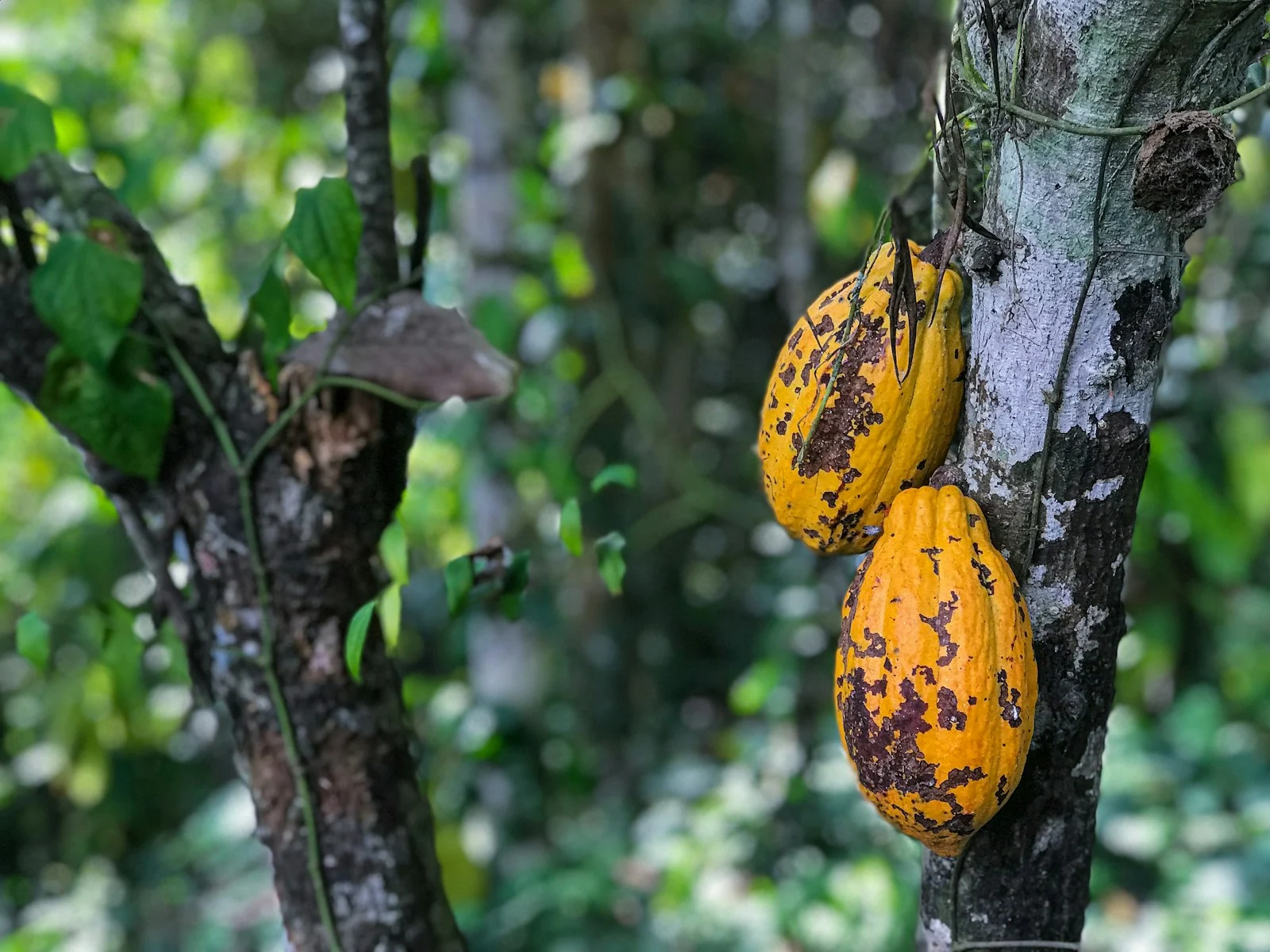
Cocoa is Côte d’Ivoire’s brown gold. With annual production of around 2 million tonnes, the country supplies 39 to 45% of world output depending on the season. Coffee and cocoa together generate 40% of export earnings and support more than 6 million Ivorians, through around 600,000 farms (Trésor, Wikipedia, Business & Human Rights Centre).
The sector is going through a critical phase. After a fall of about 25% in the 2023/2024 season, then -9.5% in 2024/2025 due to unfavourable weather and diseases (notably cocoa swollen shoot virus and black pod rot), production is expected to rebound to 1.7 million tonnes in 2025/2026 (+5.3% according to Coface). Exceptionally high world prices in 2024/2025 did not necessarily benefit farmers: 60% of cocoa farmers live below the national poverty line, and growers capture only a small share of the value the sector generates (FAO, forward-looking analysis).
Cashew: the new world benchmark
Côte d’Ivoire has become the world’s leading producer of cashew nuts, with around 1 million tonnes in 2024, close to 40% of world output. Grown mainly in the North (savanna), the crop has expanded quickly over the past fifteen years. The main issue today is local processing: until recently, most of the crop was exported as raw nuts to Asia for processing, leaving little added value in the country. Recent investments aim to raise the local processing rate above 50%.
Rubber, oil palm and banana
The country is the world’s third largest producer of natural rubber and one of the top three African producers of palm oil and banana. These value chains are dominated by integrated industrial players (SIFCA, PALMCI, SIPH), surrounded by smallholder outgrowers. The forest climate of the South and South-West offers ideal conditions for these perennial crops.
Coffee
The once flourishing coffee sector has declined sharply. Côte d’Ivoire, historically a major world producer of robusta, is no longer in the top 5. Reviving the sector relies on replanting plantations, quality certification and marketing of graded beans.
Food crops and the 2030 self-sufficiency goal
The second major task for Ivorian agriculture is securing the national food supply. The country remains heavily dependent on cereal imports, which weigh heavily on the import bill and expose urban households to world price shocks (DG Trésor, 2025).
The main food crops are:
- Rice: consumption is growing fast, but national production falls short. Developing irrigated rice is a strategic priority.
- Cassava: a major staple in the South and Centre, with iconic processed products (attiéké, gari).
- Yam: an important traditional crop in the Centre and North.
- Plantain: eaten fresh or processed (alloco, foutou), a food mainstay in the South.
- Maize: production is rising, especially in the Centre and North.
- Vegetables: tomato, chilli, onion, okra, a poorly organised sector but with strong potential around the big cities.
The National Agricultural Investment Programme (Programme National d’Investissement Agricole, PNIA) and food sovereignty policies aim to reduce dependence on imports and achieve self-sufficiency in staple cereals by 2030.
Structural challenges
Despite its performance, the Ivorian agricultural sector faces five major challenges.
1. Rural poverty and low value capture. The rural poverty rate reaches 54.4% against 37.5% nationally (DG Trésor). In the cocoa sector, 60% of farmers are below the poverty line, even though the sector generates most export earnings.
2. Deforestation. Cocoa production is one of the main causes of deforestation in Côte d’Ivoire. The EU Deforestation Regulation (EUDR) will impose strict traceability requirements on exporters from 2026, with a major impact on players in the cocoa and rubber sectors.
3. Ageing plantations and pest pressure. Cocoa and coffee plantations have a high average age. Cocoa swollen shoot virus, black pod rot and mirids significantly affected yields in 2023 to 2025.
4. Climate vulnerability. Shifting rainfall patterns in the forest zones, longer dry seasons in the North and extreme events: Côte d’Ivoire’s historic climate stability is changing, which calls for a new agronomic approach.
5. Dependence on food imports. Rice and wheat imports weigh on the balance of payments and on the purchasing power of urban households.
Policies and modernisation under way
The priorities set by the Ministère d’État, Ministère de l’Agriculture, du Développement Rural et des Productions Vivrières (Ministry of Agriculture) are built around several lines of action:
- Modernisation and professionalisation of export value chains (cocoa traceability, local cashew processing, coffee replanting).
- Development of food crop value chains (rice, cassava, vegetables) to move towards self-sufficiency by 2030.
- Stronger sustainable agriculture, with support from AFD, the World Bank and technical partners.
- Diversification and local industrialisation, with the aim of processing a growing share of agricultural raw materials before export. Emerging value chains such as ginger farming in Côte d’Ivoire illustrate this strategy, while cocoa farming remains the historic foundation of the subregion.
- Adaptation to climate change: irrigation, resistant varieties, cocoa agroforestry.
The Salon International de l’Agriculture et des Ressources Animales (SARA) in Abidjan has become the regional showcase for these ambitions.
Where to invest to improve farm performance
Three levers have a particularly strong impact in the Ivorian context.
Water management and irrigation. Climate change makes water management essential, even in the historically well-watered South. A drip irrigation system is particularly well suited to vegetables, horticulture, pineapple and some perennial plantations. Irrigation and pumping solutions secure yields and make off-season production possible, especially for peri-urban vegetable growing.
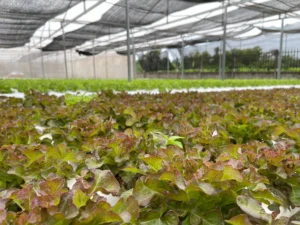
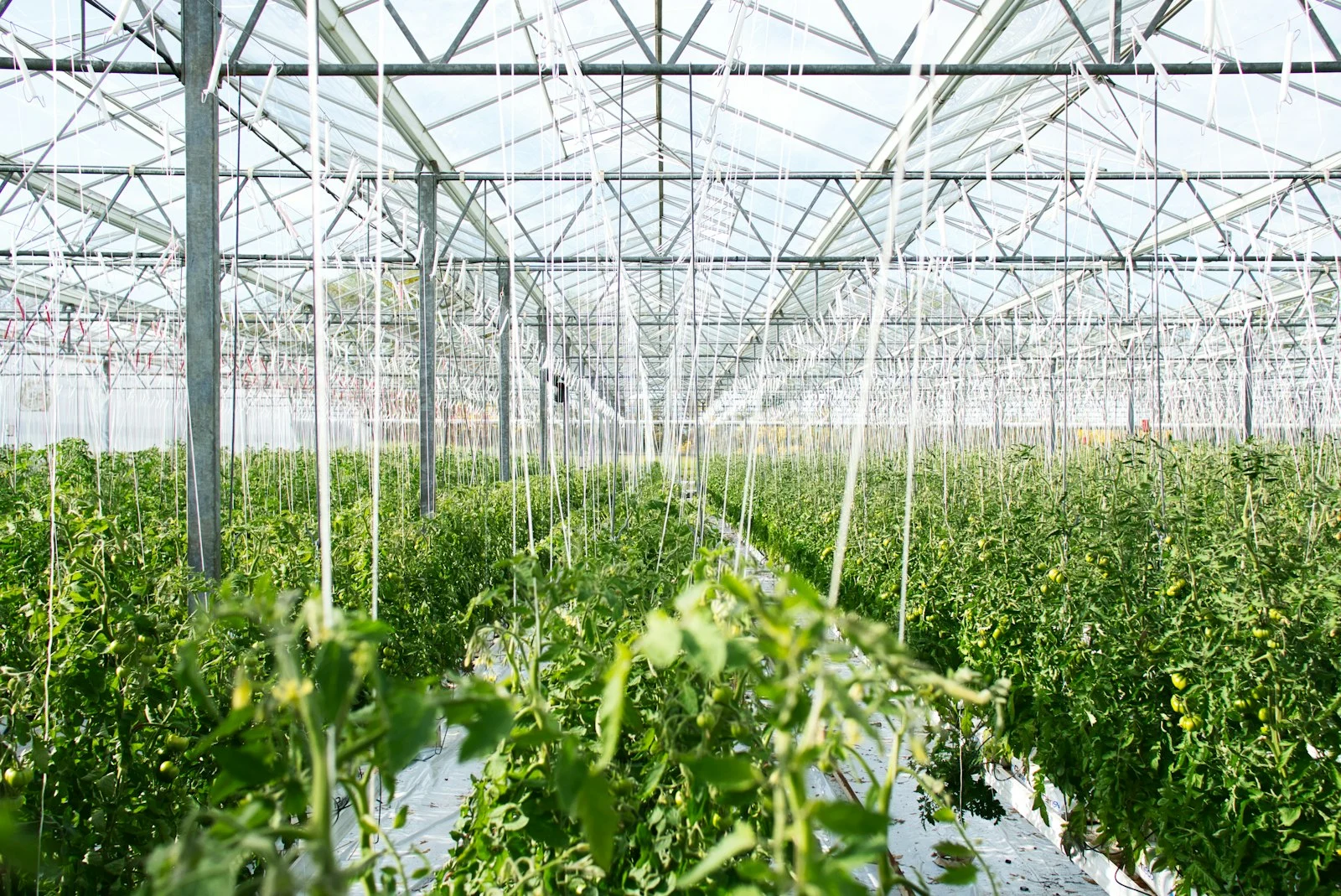
Protected cropping. Growing vegetables in an agricultural greenhouse secures production of tomato, sweet pepper, cucumber and strawberry for the urban markets of Abidjan, Bouaké and San Pedro, with yields several times higher than in open fields.
Plant nutrition and crop protection. A balanced fertilisation plan matched to soil type and integrated crop protection (resistant varieties, biocontrol, targeted treatments at the right stage) are the two most profitable levers for closing the yield gap in cocoa, rice, maize and vegetable crops. In cocoa, controlling swollen shoot and black pod rot requires an integrated, plot-level management plan that is updated regularly.
Outlook for 2026 and beyond
Ivorian growth should remain strong in 2026, driven by the expected recovery in cocoa production (+5.3%), the continued rise of cashew and the local processing strategy. The current account deficit should keep narrowing, to around 3% of GDP in the medium term (Trésor).
For project developers, investors, cooperatives and well-organised family farms, partnering with an operator able to deliver turnkey agricultural projects and rigorous agricultural consulting and engineering is the best way to turn the country’s potential into lasting profitability.
For a comparative regional overview, see our article Agriculture in Cameroon, Senegal and Côte d’Ivoire.
FAQ
What are the advantages of agriculture in Côte d’Ivoire?
Côte d’Ivoire combines several strengths: 24 million hectares of arable land, three complementary agro-ecological zones (forest, transition, Sudanian), world leadership in cocoa and cashew, a strategic location for exports (ports of Abidjan and San Pedro), a diversified, fast-growing economy and clear political will to develop agricultural value chains.
What are the problems of agriculture in Côte d’Ivoire?
Five major problems: rural poverty (54.4% against 37.5% nationally), deforestation linked notably to cocoa farming, ageing plantations and pest pressure (swollen shoot, black pod rot), growing climate vulnerability, and dependence on food imports (rice, wheat).
What are the export crops of Côte d’Ivoire?
The main export crops are cocoa (world number one, about 2 Mt a year), cashew nuts (world number one, about 1 Mt a year), natural rubber (world number three), palm oil, banana, coffee and pineapple. These crops account for more than 50% of the country’s total exports.
What are the solutions for Ivorian agriculture?
Solutions that can be acted on today: traceability and sustainability in the cocoa and rubber sectors (EUDR), local processing of cashew and cocoa, modernisation of irrigated rice, water management (drip irrigation), balanced fertilisation and integrated crop protection, agricultural greenhouses for peri-urban vegetable growing, cocoa replanting with tolerant varieties, and cocoa agroforestry to reconcile production and conservation.
How important is agriculture to the Ivorian economy?
Agriculture accounts for about 14.8% of GDP in 2024, employs 46% of the workforce and supplies 51.5% of the country’s exports. Coffee and cocoa alone generate 40% of export earnings and support more than 6 million Ivorians.
What is Côte d’Ivoire’s food self-sufficiency goal?
The national strategy targets food self-sufficiency by 2030, mainly in rice, cassava, vegetables and maize. The National Agricultural Investment Programme (PNIA) mobilises public and private investment to reach this goal.
Sources
- DG Trésor (France), Côte d’Ivoire : Agriculture et politique agricole, June 2025.
- DG Trésor (France), Côte d’Ivoire : Situation économique et financière, 2025.
- Coface, Côte d’Ivoire, Country File 2025.
- Ministère d’État, Ministère de l’Agriculture, du Développement Rural et des Productions Vivrières (Côte d’Ivoire).
- FAO, Analyse prospective de la filière cacao en Côte d’Ivoire.
- Business and Human Rights Centre, Précarité des planteurs.
- Business France / Team France Export, Solutions pour les cultures végétales en Côte d’Ivoire, 2024.
- Wikipedia, Économie de la Côte d’Ivoire, 2026.
- Programme National d’Investissement Agricole (PNIA), Ministry of Agriculture.
Further reading
- Oil palm: cultivation, planting density and yields: managing an oil palm plantation, from choosing tenera planting material to harvest, in one of the country’s major value chains.