Agriculture in Cameroon: key figures, value chains and challenges in 2026
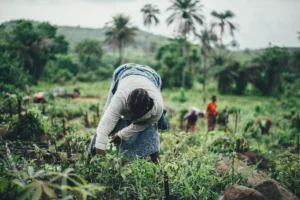
Agriculture remains Cameroon’s largest employer and one of the three pillars of its economy. In 2024 the primary sector accounted for about 17.4% of gross domestic product, with agriculture in the strict sense at around 10% of GDP, according to the French Treasury Directorate General. It employs 55% of the working population according to the 2020 census of the National Institute of Statistics (INS) and involves nearly 2 million farming households. This article reviews the value chains, production zones, structural challenges and the modernisation levers under way in 2026.
Agriculture, the backbone of Cameroon’s economy
Cameroon has an exceptional agricultural base by Central African standards: 47 million hectares of total land area, of which around 9.2 million hectares are usable for agriculture and 7.2 million hectares are arable land, plus nearly 2 million hectares of pasture (SDSR/FAOLEX). Despite this potential, only 1.8 million hectares are actually cultivated, or 26% of the cultivable area. This gap between potential and actual use is both the sector’s main constraint and its greatest room for growth.
Over the 2018 to 2025 period, agricultural value added generated nearly FCFA 16,080 billion, making agriculture the leading contributor to the 2020 to 2030 National Development Strategy in terms of import substitution and job creation (ministerial statement quoted by Africa24, September 2025). In 2024, food crop agriculture grew by +3.2%, against +1.3% in 2023 (National Accounts 2024, INS).
The main agricultural value chains
Cameroon’s farming landscape rests on two broad groups: export crops and food crops.
Export and cash crops
The main export value chains are:
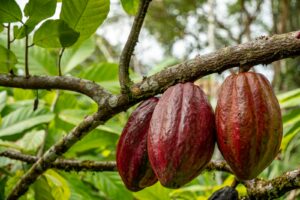
- Cocoa: a strategic value chain, boosted by exceptionally high world prices in 2024 and 2025. The country ranks among Africa’s major producers, behind Côte d’Ivoire and Ghana.
- Cotton: more than 300,000 tonnes produced each year, mainly in the northern regions (North, Far North, Adamawa), with a network of cooperatives organised by SODECOTON.
- Export bananas: mainly in the Littoral region (CDC, PHP).
- Palm oil: production concentrated in the South-West and Littoral, with CDC, Socapalm and Pamol as the long-established operators.
- Natural rubber (hevea): a value chain driven by HEVECAM and Sud-Cameroun Hévéa.
- Coffee (robusta and arabica): a value chain being rebuilt after a long period of decline.
These value chains account for most export earnings, but around 85% of Cameroon’s exports are still raw or barely processed products (crude oil, cocoa, timber, liquefied natural gas, cotton), which fuels a structural trade deficit (DG Trésor, 2025).
Food crops
The staple diet rests on five pillars:
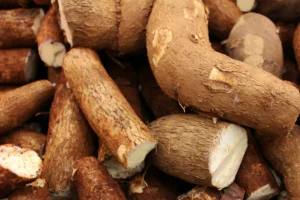
- Cassava: around 5.34 million tonnes a year, an essential staple across the southern half of the country (FAOSTAT 2024).
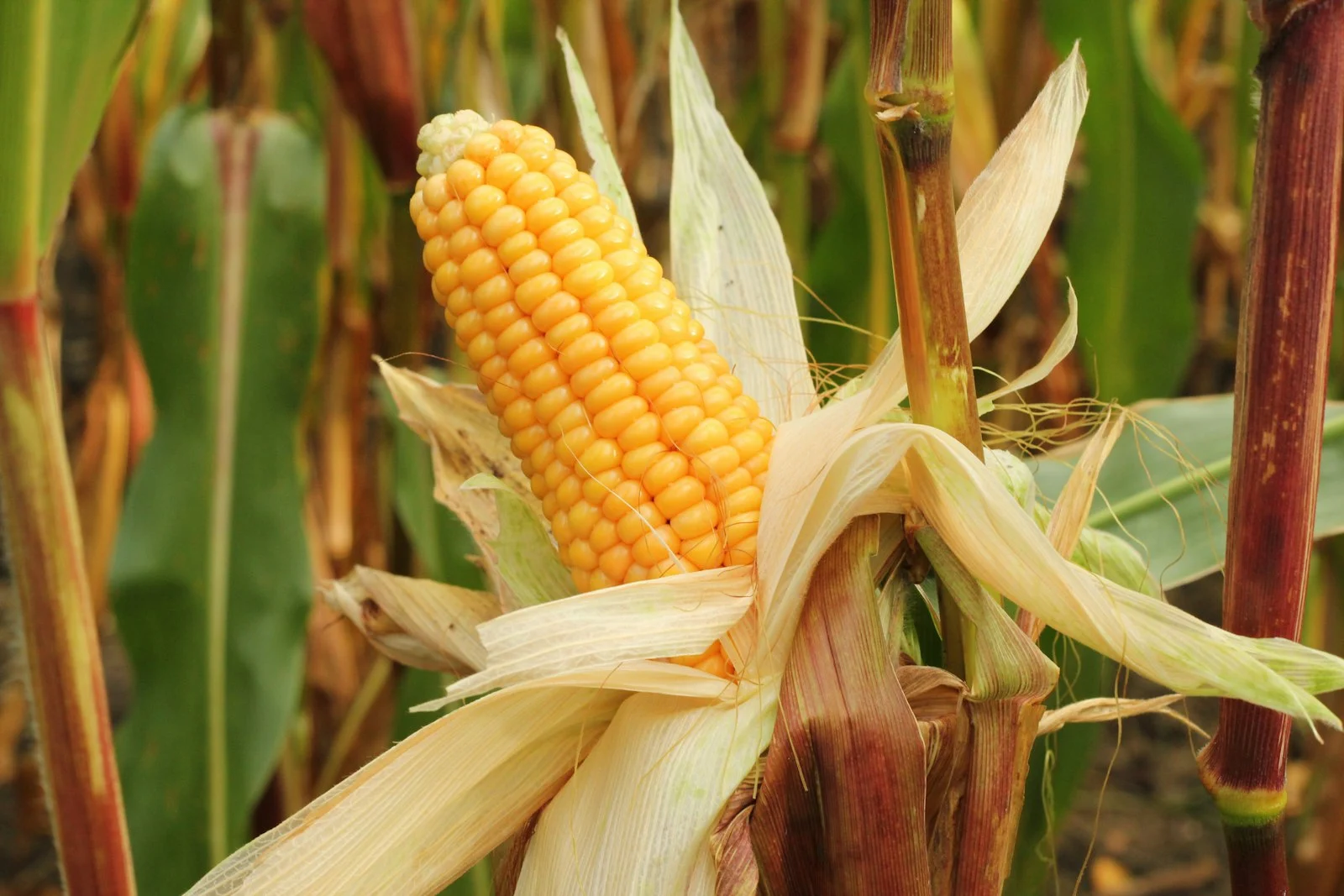
- Maize: 2.36 million tonnes in 2023, up 7% since 2018.
- Plantain: a major perennial crop in the forest regions, with production above 4 million tonnes.
- Millet and sorghum: the dominant cereals in the North and Far North regions.
- Rice: national production still falls short of demand, which keeps import dependence high.
Five distinct agro-ecological zones
Cameroon is often called “Africa in miniature” because of the diversity of its agro-ecological zones:
- Sudano-Sahelian zone (Far North, North): cotton, millet, sorghum, groundnut.
- Guinean high savannah zone (Adamawa): maize, root and tuber crops.
- Western highlands zone (West, North-West): arabusta, vegetables, plantain, potato, with a high density of small farms.
- Humid forest zone with bimodal rainfall (Centre, South, East): cocoa, coffee, cassava, plantain.
- Humid forest zone with monomodal rainfall (Littoral, South-West): export bananas, palm oil, rubber, cocoa.
This diversity is a major competitive advantage: very few African countries cover all the main tropical value chains within a single territory.
The structural challenges facing agriculture in Cameroon
Five constraints currently limit the sector’s productivity.
1. Underuse of land potential. With only 26% of cultivable land actually farmed, the room for gains is considerable, but insecure land tenure, fragmented holdings and land clearing costs hold back mechanisation.
2. Low mechanisation. The national stock of farm machinery remains too small for the size of the sector, despite the recent acquisition of 1,000 tractors financed by the African Development Bank and the creation of 200 community mechanisation workshops between 2021 and 2024.
3. Access to and cost of inputs. Improved seed, fertilisers and crop protection products remain expensive and unevenly available, especially in remote areas. The quality of imported inputs varies, which weighs on yields.
4. Climate vulnerability. Droughts in the north, flooding in low-lying areas, disrupted rainy seasons in the forest zones: climate change directly affects cropping calendars and yields. Water management is becoming a first-order limiting factor.
5. Post-harvest losses. Losses in food crop value chains (cassava, maize, tomato, plantain) can reach 20 to 40% for lack of dryers, adequate storage systems and cold chain logistics.
Modernisation under way: four levers in action
The Ministry of Agriculture and Rural Development (MINADER) builds its strategy around four levers, within the framework of the 2020 to 2030 National Development Strategy:
- Mechanisation: the 1,000 AfDB tractors and 200 community workshops aim to move the human workload from a manual model to a semi-motorised model on large farms.
- Easier access to inputs: targeted fertiliser and pesticide subsidies for priority value chains (maize, rice, cotton).
- Technical support: stronger extension services and wider deployment of the Institute of Agricultural Research for Development (IRAD).
- Value chain organisation: contract farming between producers and processors, particularly in cotton, cocoa and palm oil.
On the ground, modernising a farm usually follows a well-defined sequence: agronomic and soil audit → farm layout plan (plots, drainage, irrigation) → variety selection → fertilisation plan → integrated protection → suitable mechanisation. This is precisely the approach taken by agricultural consulting and engineering providers such as JOGOO Agriculture on turnkey projects.
Where to act to improve yields
Three areas currently offer Cameroonian farms the best return on investment in terms of yield.
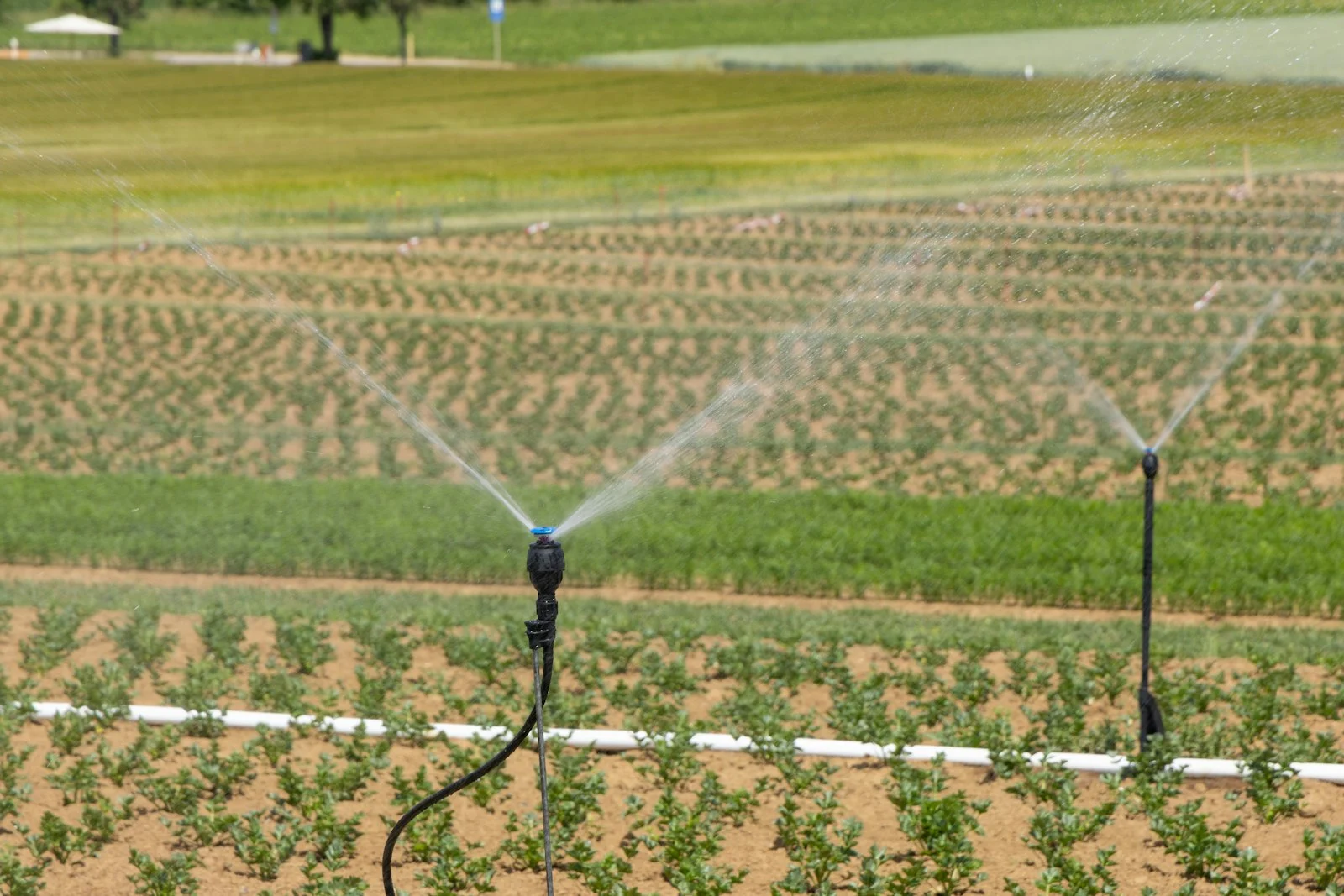
Water management. With effective rainfall becoming scarcer in the north and poorly distributed within the season elsewhere, irrigation is becoming a competitiveness factor. A drip irrigation system cuts water use by 30 to 50% compared with surface irrigation, while making fertiliser application more precise through fertigation. Irrigation and pumping solutions suited to small and medium farms are now available at budgets that fit the structure of family farms.
Input quality. A well-formulated fertiliser and certified seed can raise yields by 30 to 100% depending on the crop. Access to reliable farm supplies and inputs remains a key issue, particularly for maize, irrigated rice and vegetable production.
Crop protection. Fall armyworm on maize, cocoa black pod rot, tomato late blight, bacterial wilt of plantain: pest and disease pressure is high. An integrated crop protection strategy combining resistant varieties, biocontrol and targeted treatments gives the best long-term results.
Outlook for 2026 and beyond
The IMF projects non-oil GDP growth of +4.2% in 2026, driven partly by agriculture and agrifood. Firm world prices for cocoa and coffee, combined with the political will to replace agricultural imports (rice, refined palm oil) with local production, open a window of opportunity for investors and farmers who are structuring their projects today.
For entrepreneurs and farmers ready to modernise their operations, working with a partner able to design turnkey agricultural projects, from the agronomic study through to production, is now the most effective shortcut to profitability.
For a regional comparison, see our article Agriculture in Cameroon, Senegal and Côte d’Ivoire.
FAQ
How much does agriculture contribute to Cameroon’s economy?
The primary sector accounts for about 17.4% of GDP in 2024, including 10% for agriculture in the strict sense, according to the French Treasury Directorate General. It employs 55% of the working population (INS, 2020) and involves nearly 2 million farming households.
What are Cameroon’s main export crops?
The main export value chains are cocoa, cotton, bananas, palm oil, natural rubber and coffee. Cotton exceeds 300,000 tonnes a year, mainly produced in the northern regions.
Which food crops matter most?
Cassava (5.34 million tonnes/year), maize (2.36 million tonnes in 2023), plantain, millet, sorghum and rice form the backbone of the country’s food supply.
How many agro-ecological zones does Cameroon have?
The country has five agro-ecological zones: Sudano-Sahelian, Guinean high savannah, Western highlands, humid forest with bimodal rainfall, and humid forest with monomodal rainfall. This diversity allows almost all the major tropical crops to be grown within a single territory.
What are the main challenges for agriculture in Cameroon?
Five structural challenges: underuse of land potential (only 26% of the cultivable area actually farmed), low mechanisation, access to inputs, climate vulnerability, and high post-harvest losses.
How can a Cameroonian farm be modernised?
Through a sequence of agronomic audit → land development (irrigation, drainage) → improved seed → adapted fertilisation → integrated protection → targeted mechanisation. Working with a partner specialised in agricultural consulting and engineering speeds up implementation and secures the investment.
Sources
- National Institute of Statistics (INS), Comptes Nationaux 2024, September 2025.
- National Institute of Statistics (INS), Recensement Général de la Population 2020.
- Treasury Directorate General (France), Indicateurs et conjoncture, Cameroun, 2025.
- Ministry of Foreign Affairs (France), Fiche pays Cameroun, February 2026.
- FAOSTAT, 2024 database.
- World Bank, 2023 data on agriculture’s contribution to GDP.
- MINADER, Stratégie de Développement du Secteur Rural, Volet Agriculture, FAOLEX.
- Investir au Cameroun, « Bilan 2018-2025 : l’agriculture de l’avenir prend racines », 2025.
- International Monetary Fund (IMF), 2025 to 2026 projections.
Further reading
- Oil palm: cultivation, planting density and yields: one of the country’s key cash crop value chains, from nursery to harvest.