Agriculture in Cameroon, Senegal and Côte d’Ivoire: key figures, value chains and challenges in 2026
Agriculture remains the leading economic and social pillar in many French-speaking African countries. Together, Cameroon, Senegal and Côte d’Ivoire are home to more than 80 million people, two strategic coastlines and an agro-ecological heritage stretching from the Sahel to the equatorial forest. This comparative overview sets out the key 2024 figures, the main value chains, the shared challenges and the modernisation levers that shape the sector in all three countries today.
Three economies, one common denominator: agriculture
Despite their differences, the three countries share one fundamental trait: agriculture carries structural weight in their GDP and employs a very large share of the working population. The table below summarises the main agricultural macroeconomic indicators for 2024.
| Indicator | Cameroon | Senegal | Côte d’Ivoire |
|---|---|---|---|
| Agriculture’s share of GDP | ~10% (primary sector ~17.4%) | ~15% | 14.8% |
| Agricultural employment (% of labour force) | 55% | 22 to 27% | 46% |
| Total population (2025) | ~30 M | ~18 M | ~30 M |
| Farm households / rural dependence | ~2 M farm households | 65% of labour force rural · 95% of rural households | 6 M people dependent on cocoa alone |
| Agriculture’s share of exports | ~85% of exports are minimally processed (cocoa, timber, cotton) | Groundnut, horticulture | 51.5% of exports |
| Global leadership | 4th largest cocoa producer in Africa | Africa’s leading groundnut producer | World’s leading producer of cocoa and cashew |
Sources: DG Trésor (France) 2024 to 2025; ANSD Senegal 2023; INS Cameroon 2020 to 2024; Coface 2025.
Leading value chains: three distinct models
The three countries illustrate three different ways of plugging into global agricultural value chains.
Cameroon: diversity as both asset and challenge
Cameroon combines export crops (cocoa, cotton, banana, palm oil, rubber, coffee) with robust food crops (cassava 5.34 Mt/year, maize 2.36 Mt in 2023, plantain, millet, sorghum). Its five agro-ecological zones, from the Sudano-Sahelian north to the equatorial forest, give it a unique profile: few African countries cover every major tropical value chain within a single territory. The constraint: only 26% of the cultivable land is actually farmed.
Full analysis: Agriculture in Cameroon.
Senegal: family farming under climate pressure
Senegal’s agriculture is built around groundnut (40% of cultivated land, the leading export after fisheries), millet, irrigated rice in the Senegal River valley and the dynamic horticulture of the Niayes. What sets Senegal apart is the central role of family farming and its extreme climate vulnerability: the World Bank ranks it among the four most vulnerable countries in the world, with extreme weather events costing more than 10% of GDP every year.
Full analysis: Agriculture in Senegal.
Côte d’Ivoire: the export crop champion
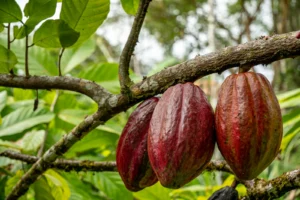
Côte d’Ivoire is the world’s leading producer of cocoa (~2 Mt/year, 39 to 45% of world output) and cashew nuts (~1 Mt/year, 40% of the world market), as well as the world’s 3rd largest producer of natural rubber. Its main challenge: consolidating its export value chains in the face of deforestation and European traceability requirements, while developing its food crops to reach food self-sufficiency by 2030.
Full analysis: Agriculture in Côte d’Ivoire.
Five shared challenges
Beyond their individual features, the three countries face a core set of shared structural challenges that defines the regional modernisation agenda.
1. Growing climate vulnerability. Droughts in the Senegalese Sahel and northern Cameroon, disrupted rainy seasons in Côte d’Ivoire and Cameroon’s forest zone, floods: climate change is forcing a rethink of cropping calendars and a new approach to irrigation.
2. Low mechanisation and productivity. Average yields remain well below world standards for most crops. Low mechanisation (Cameroon: 1,000 tractors recently financed by the AfDB, still a modest figure; Senegal and Côte d’Ivoire in a comparable position) limits the size of viable farms.
3. Access to inputs and input quality. Improved seed, fertilisers and crop protection products remain expensive and unevenly available. The quality of imported inputs varies, which weighs on yields and profitability.
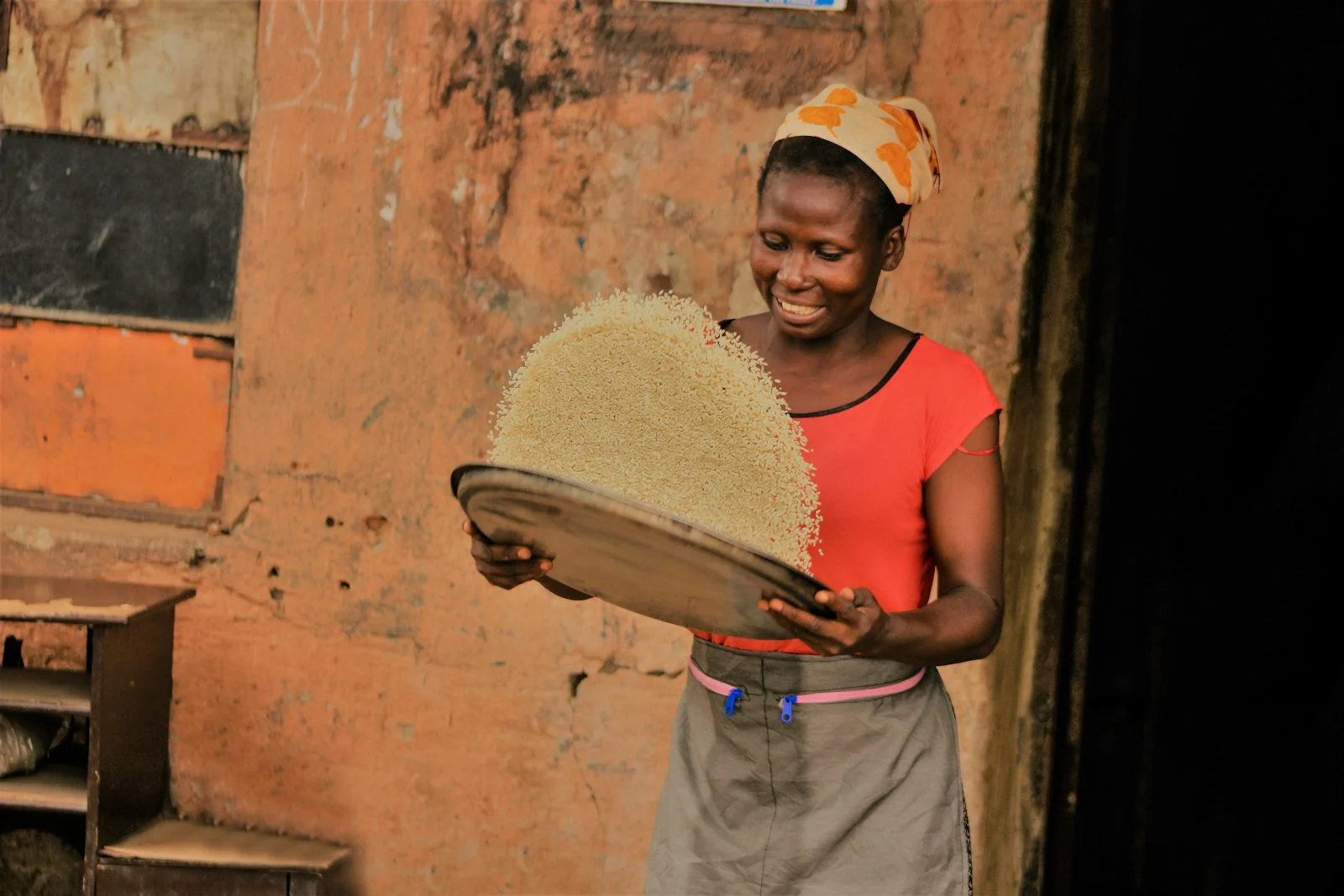
4. High post-harvest losses. In food crop value chains, losses can reach 20 to 40% for lack of dryers, adequate storage and cold chains, particularly for vegetables, tomato, plantain and cassava.
5. Dependence on food imports. Rice, wheat, vegetable oil: all three countries import a significant share of the food eaten in their cities, which exposes consumers to world price shocks and weighs on the trade balance.
Five modernisation levers that work
The levers for transformation are well identified. They apply in all three countries, with local adaptations.
1. Water management
Water management is the number one limiting factor in almost every situation. A drip irrigation system cuts water use by 30 to 50% compared with surface irrigation, while making fertiliser application more precise (fertigation). It suits vegetable production (the Niayes in Senegal, Abidjan’s green belt, West Cameroon), export horticulture and some perennial plantations. See also our full range of irrigation and pumping solutions.
2. Protected cropping
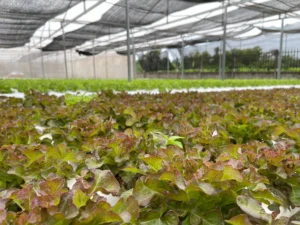
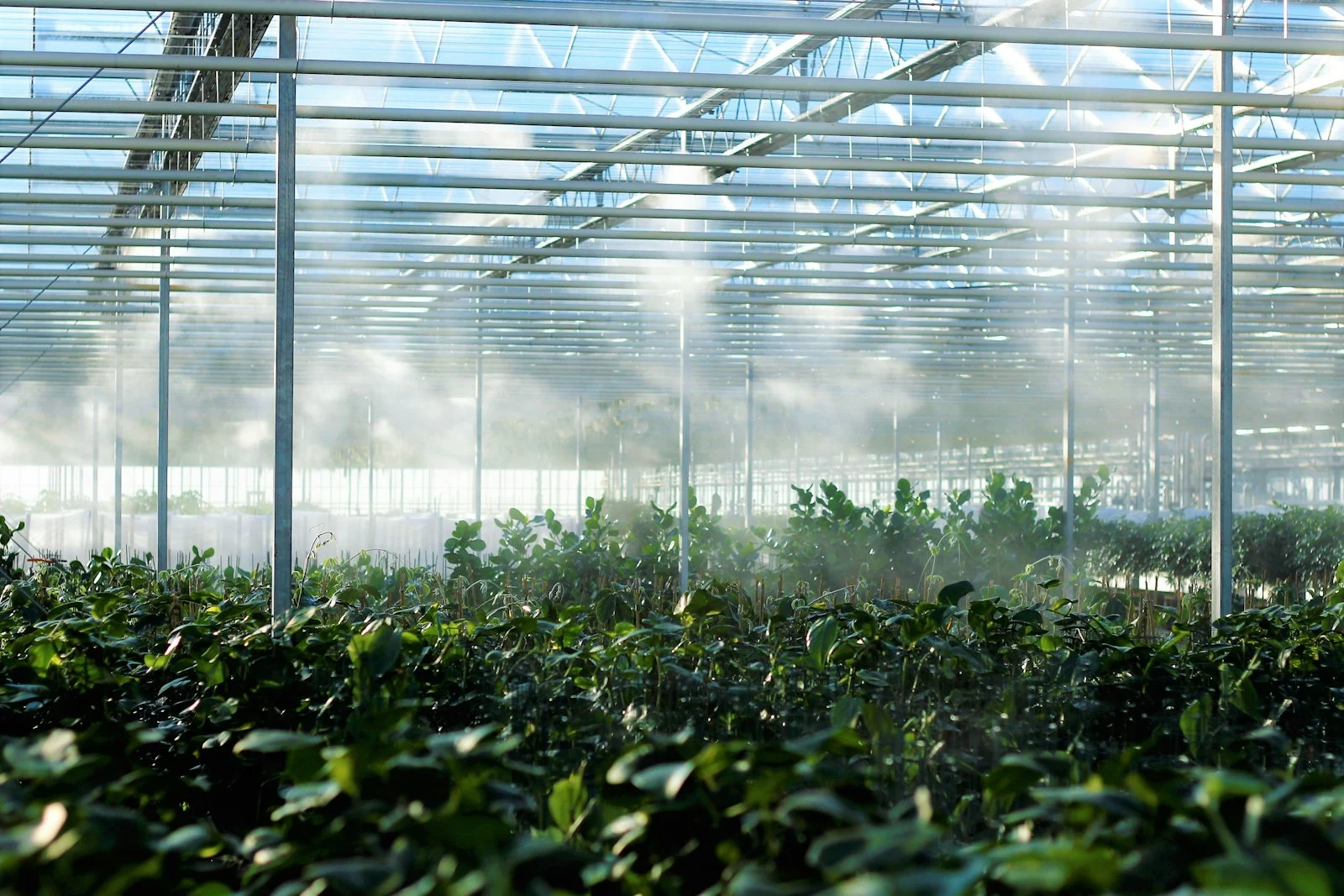
Agricultural greenhouses secure the supply of tomato, sweet pepper, cucumber, lettuce and strawberry to urban markets. They allow off-season production, reduce pest pressure and raise yields by a factor of 3 to 10 depending on the crop. They are especially profitable on the outskirts of large cities (Douala, Yaoundé, Dakar, Abidjan).
3. Balanced plant nutrition
Balanced fertilisation matched to soil type and crop is the most underused lever in the region. A fertiliser plan based on a prior soil analysis improves yields by 30 to 100% depending on the crop. Quality farm supplies and inputs (certified seed, crop-specific fertilisers, biostimulants) are now available at budgets that suit medium-sized farms.
4. Integrated crop protection
Fall armyworm on maize, swollen shoot and black pod on cocoa, late blight and bacterial diseases on vegetables: pest and disease pressure is high everywhere. An integrated protection strategy (resistant varieties, biocontrol, targeted treatments at the right stage) gives the best long-term results, while limiting residues on export crops subject to European standards.
5. Project engineering and design
Modernising a farm is never about a single input. It requires a structured sequence: agronomic and soil audit → layout plan (plots, drainage, irrigation) → variety selection → fertilisation plan → integrated protection → appropriate mechanisation → marketing plan. Working with a partner that specialises in agricultural consulting and engineering and turnkey agricultural projects is the most effective shortcut to securing the investment and shortening the time to first harvest.
Outlook for 2026: three countries, one window of opportunity
The 2026 context opens a window of opportunity for structured agricultural investment in all three countries:
- High commodity prices, cocoa and coffee in particular, which improve the profitability of Ivorian and Cameroonian export value chains.
- Clear political will: food sovereignty in Senegal, food self-sufficiency by 2030 in Côte d’Ivoire, import substitution in Cameroon’s 2020 to 2030 strategy.
- Available financing: the African Development Bank, the World Bank, AFD and Chinese funding actively support mechanisation, irrigation and modernisation.
- Fast-growing urban markets: the urban middle classes of Senegal, Côte d’Ivoire and Cameroon are driving demand for vegetables, processed products and animal protein.
For investors, cooperatives and farmers structuring their projects today, the guiding principle remains the same: rigorous design, high-quality technical execution and a long-term partnership with an operator able to support the entire chain.
FAQ
Which are the main agricultural countries in French-speaking Africa?
Côte d’Ivoire (world’s leading producer of cocoa and cashew), Cameroon (exceptional diversity of value chains, 5 agro-ecological zones) and Senegal (family farming, groundnut, horticulture) are among the main French-speaking agricultural countries of sub-Saharan Africa. They share common challenges and similar modernisation levers.
Which country has the largest share of its GDP in agriculture?
Of the three countries, Senegal (~15%) and Côte d’Ivoire (14.8%) had the highest share of agriculture in GDP in 2024. In Cameroon, agriculture in the strict sense accounts for ~10% of GDP, with the wider primary sector at 17.4%.
What is the main export crop in French-speaking West Africa?
Cocoa dominates by far, with Côte d’Ivoire as the world’s leading producer (~2 Mt/year, 39 to 45% of the world market). Cameroon is also a major producer. Cashew nut is the zone’s second strategic export crop, with Côte d’Ivoire the world’s leading producer. Groundnut plays that role in Senegal.
What challenges do farmers in these countries share?
Five shared challenges: climate vulnerability, low mechanisation and productivity, access to inputs and input quality, high post-harvest losses and dependence on food imports (rice, wheat).
How can agriculture in French-speaking Africa be modernised?
Five levers: water management (drip irrigation, pumping), agricultural greenhouses for vegetable production, balanced fertilisation based on soil analysis, integrated crop protection, and support from an operator specialising in agricultural consulting and engineering on turnkey projects.
How do you start a profitable farming project in these countries?
A profitable farming project always starts with an agronomic and site study, continues with a rigorous layout plan (irrigation, drainage, plots), then moves on to variety selection, fertilisation, integrated protection and appropriate mechanisation. An operator specialising in turnkey agricultural projects secures each of these stages.
Related technical guides
To move from the macroeconomic overview to the crop management details, these guides cover the value chains discussed above:
- Growing cocoa in Cameroon: planting density, orchard maintenance, farm-gate price and yield per hectare.
- Growing ginger in Côte d’Ivoire: the full crop management sequence and market outlets.
- Planting potatoes: cropping calendar, density and fertiliser management.
- Soilless growing and hydroponics: NFT, DWC and substrate systems in tropical greenhouses.
- How to plant an avocado: from the seed to the young grafted plant.
Sources
- DG Trésor (France), Cameroon country profile, Côte d’Ivoire (2024 to 2026).
- INS Cameroun, Comptes Nationaux 2024.
- ANSD Sénégal, Note d’analyse T4 2023.
- Coface, Côte d’Ivoire, Country File 2025.
- Forbes Afrique, February 2025.
- Investir au Cameroun, « Bilan 2018-2025 ».
- Business France / Team France Export, 2024 to 2025.
- FAO, Analyse prospective cacao Côte d’Ivoire and Secteur agricole sénégalais.
- World Bank, 2023 data.
- African Development Bank (AfDB), agricultural employment reports.