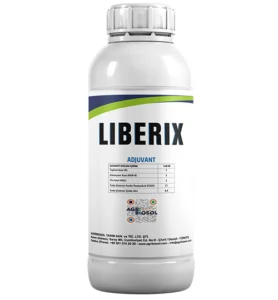
An NPK foliar fertilizer is a nutrient solution sprayed directly onto the foliage, where the nutrients cross the cuticle and are absorbed within a few hours. It corrects a visible deficiency quickly, but it does not replace soil fertilization, and the reason is simple arithmetic. At standard application rates, ARVALIS measured supplies of 0.2 to 1.5 kg of nitrogen per hectare, 1 to 2 kg of P2O5 and 0.3 to 1.3 kg of K2O. Compared with the hundreds of kilos of NPK spread on the soil, the orders of magnitude are simply not the same.
This article draws on measurements published by technical and agronomic institutes to answer a question few sales sheets address honestly: what does a foliar fertilizer really deliver, and in which situations is it worth the cost?
How much nutrient does an NPK foliar fertilizer actually supply
ARVALIS, the French technical institute for field crops, quantified the amounts actually supplied by foliar products on the market, according to their concentration and the volume applied.
| Nutrient | Supply per application | Condition |
|---|---|---|
| Nitrogen (N), low-concentration products | 0.2 to 1.5 kg N/ha | Volumes of 4 to 5 L/ha |
| Nitrogen (N), concentrated products | 6 to 20 kg N/ha | Volumes of 20 to 100 L/ha |
| Nitrogen, recommended ceiling | 20 kg N/ha | Per application, not to be exceeded |
| Phosphorus (P2O5) | 1 to 2 kg/ha | Usual concentrations |
| Potassium (K2O) | 0.3 to 1.3 kg/ha | Usual concentrations |
Reading this table is enough to settle the debate. A vegetable grower aiming for a decent yield thinks in hundreds of kilos of NPK and urea per hectare, as our article on NPK 15 15 15 rates by crop explains. A kilo and a half of potash applied through the leaf counts for nothing in that balance. On the other hand, a few dozen grams of zinc or boron per hectare, which the soil will never supply properly, can make the difference at fruit set.
The leaf does not absorb every nutrient the same way
This is the point marketing most often glosses over. The Quebec Research and Development Institute for the Agri-Environment (IRDA) ranks nutrients by their actual foliar uptake:
- Well absorbed: magnesium, which unlike phosphorus and potassium passes readily through the foliage, and nitrogen in urea form, whose foliar uptake is well established.
- Applied almost exclusively through the leaf: zinc, which is rarely incorporated into the soil.
- Poorly absorbed or not absorbed: phosphorus, for which IRDA states that no scientific data show appreciable foliar uptake, and potassium, which the foliage absorbs very little.
In other words, the NPK label on a foliar product is largely decorative as far as the P and K are concerned. What really does the work is urea nitrogen, magnesium and the trace elements.
What the trials say, not just the labels
ARVALIS ran series of trials between 2001 and 2014 on small-grain cereals. The results are worth knowing before any purchase.
On phosphorus, the 2013 trials at three sites gave no significant yield gain over the untreated control, whereas in the same set-up conventional phosphate fertilizer added about 3 quintals per hectare, or 300 kg/ha. The foliar route did not reproduce this effect. Responses were only obtained with rates of 30 to 60 kg of P2O5 per hectare, and only on severely deficient soils, which is well beyond the scope of a foliar application.
On nitrogen, thirteen trials compared foliar products with ammonium nitrate at the same total amount of nitrogen. Yield was equivalent, with a non-significant difference of 0.5 quintal per hectare, but grain protein content fell by about 0.5 point. Foliar feeding therefore replaces solid fertilizer at an equal amount, with no yield advantage and an adverse effect on quality.
A third result explains many failures in the field: interception. At the two-node stage, about 30 percent of the spray is intercepted by the canopy. At heading, interception rises to 60 or 80 percent. The rest falls to the ground. And in dry weather, ARVALIS notes that only a very small fraction of the nutrients applied to the leaf manages to penetrate.
Situations where foliar feeding really is the right tool
The FAO and IFA guide on fertilizers and their use is explicit: foliar spraying is the most effective method for applying micronutrients, which are needed only in very small amounts, and, when the crop is under stress, also nitrogen or NPK.
Four cases justify a foliar fertilizer in our climates:
- Correcting a trace element deficiency that is already visible, without waiting for a soil application to take effect, which can take several weeks.
- Supplying micronutrients that move poorly in the soil: boron, zinc, manganese, copper, iron. Pieri and Moreau, in their CIRAD and ORSTOM synthesis on tropical soil fertility, point out that boron deficiency cannot be detected by soil analysis and shows up only through leaf diagnosis, and they report copper and zinc deficiencies in oil palm.
- Getting through a physiological milestone: flowering, fruit set, fruit filling, recovery after water stress.
- Working on degraded soil, where root uptake is limited by extreme pH or compacted structure.
The same tropical synthesis reports that in coconut, a leaf chlorine content below 0.1 percent signals a likely yield gain after correction, with the optimum at around 0.5 to 0.6 percent. It is a perfect illustration of the principle: leaf diagnosis identifies the deficiency, and foliar feeding corrects it.
The spraying rules that decide the result
Mario Leblanc, an agronomist with the Quebec Ministry of Agriculture, Fisheries and Food, sums up the basic rules in a fact sheet for field vegetable growers:
- Spray volume: at least 200 litres of water per hectare. Below that, leaf coverage is inadequate and the product dries before it has penetrated.
- Timing: morning, evening or in cloudy weather, with no wind and no high temperatures, so that the spray dries slowly and gives the nutrients time to pass through.
- Rate: never above the stated rate. Excessive concentration closes the stomata and scorches the foliage, which costs more than the deficiency being treated.
FAO and IFA give the same instruction: stick strictly to the recommended concentration and spray in overcast weather, early in the morning or late in the afternoon, to prevent the droplets from drying instantly. In a tropical climate, with very hot afternoons and dry air in the dry season, this rule is not a nicety: it is the condition for the product to do any good at all.
One last operational precaution: check tank compatibility before mixing with any crop protection product. An incompatible mix precipitates, blocks the nozzles and wastes both products.

Where foliar feeding fits in a fertilization plan in West Africa
The FARM Foundation points out that fertilizer use averages around 15 kg per hectare in West Africa, compared with an average of 120 kg per hectare in the rest of the world. In this context, the absolute priority remains basal fertilization: organic matter, phosphorus and potash in the soil, and split nitrogen. A grower who buys a foliar product before securing basal fertilization has the limiting factors in the wrong order.
The sensible decision sequence is as follows. First build the basal fertilization, as described in our guide to NPK, foliar and organic fertilizers. Then watch the crop and, if a trace element deficiency symptom appears or a key stage is approaching, apply a targeted foliar product. For maize, our report on the AgriBiosol foliar fertilizer protocol details a practical application. In vegetable farming, where cycles are short and calcium and boron deficiencies are common, foliar feeding offers its best cost-benefit ratio.
Our agronomists build fertilization and plant nutrition plans from a diagnosis of the plot, not from a product catalogue.
Frequently asked questions
Can a foliar fertilizer replace soil-applied NPK?
No. ARVALIS measurements show that a foliar application supplies 1 to 2 kg of P2O5 and 0.3 to 1.3 kg of K2O per hectare, nothing like the amounts applied to the soil. Foliar feeding is a precision supplement, not a fertilization programme.
Which nutrients pass best through the leaf?
According to IRDA, magnesium and nitrogen in urea form are well absorbed by the foliage, and zinc is applied almost exclusively by this route. Phosphorus has no demonstrated appreciable foliar uptake and potassium is very poorly absorbed.
What time of day should you spray a foliar fertilizer?
In the morning, late afternoon or in overcast weather, with no wind and outside the hottest hours. FAO and IFA, like the Quebec Ministry of Agriculture, insist on this point: if the droplet dries immediately, the nutrients do not penetrate.
How much water do you need per hectare?
At least 200 litres of spray per hectare, according to the Quebec Ministry of Agriculture fact sheet, to cover the foliage properly.
Why did my foliar fertilizer have no effect?
Three causes dominate: application in dry weather, when penetration is very low according to ARVALIS; a stage at which the foliage intercepts little spray, about 30 percent at the two-node stage; or the absence of any real deficiency to correct. A foliar product adds nothing to a crop that is already properly fed.
Can foliar fertilizer burn leaves?
Yes, if overdosed. Too high a concentration closes the stomata and causes scorching. The rule is never to exceed the rate stated by the manufacturer.
Sources
- ARVALIS, Les apports de nutriments par voie foliaire sur céréales à paille ont-ils un intérêt
- IRDA, Réseau-pommier, fiche Apports en éléments nutritifs
- Mario Leblanc, Quebec Ministry of Agriculture, Fisheries and Food, Les règles de base pour l’utilisation des fertilisants foliaires
- FAO and IFA, Fertilizers and their use
- Pieri and Moreau, Fertilité des sols et fertilisation des cultures tropicales, CIRAD and ORSTOM, IRD documentation
- FARM Foundation, Engrais et fertilité des sols en Afrique de l’Ouest
Not sure whether your plot needs a soil application or a foliar supplement? Our farm supplies and inputs team will point you to the product that is genuinely useful in your situation.