
Download the technical sheet (PDF)
You do not need a garden to grow your own tomatoes. A single large pot on a balcony, rooftop or courtyard can produce 5 to 10 kilograms of fresh tomatoes across a season, enough to keep a family in salads and salsa for months. Container tomato growing has taken off across urban Africa, Latin America and Southeast Asia because it works with almost no land, uses less water than field cultivation, and lets you control soil quality completely. This guide walks through everything from choosing the right variety through pot size, soil, watering, staking, feeding, and harvest.
1. Choose the right variety for containers
Not every tomato variety is suited to pots. The two categories to know:
- Determinate (bush) tomatoes,grow to a fixed size (60 to 120 cm), fruit all at once over 3 to 4 weeks. Ideal for smaller pots and beginners. Varieties: Roma, Rio Grande, Patio, Bush Early Girl, Tumbler.
- Indeterminate (vining) tomatoes,keep growing and producing all season, need serious staking, best in large pots. Varieties: Cherry, San Marzano, Beefsteak, Sungold, Money Maker.
For a first-time container grower, start with cherry tomatoes or a compact determinate variety. Cherry tomatoes in particular are extraordinarily productive in pots and forgiving of mistakes.
2. Pot size, the single most important decision
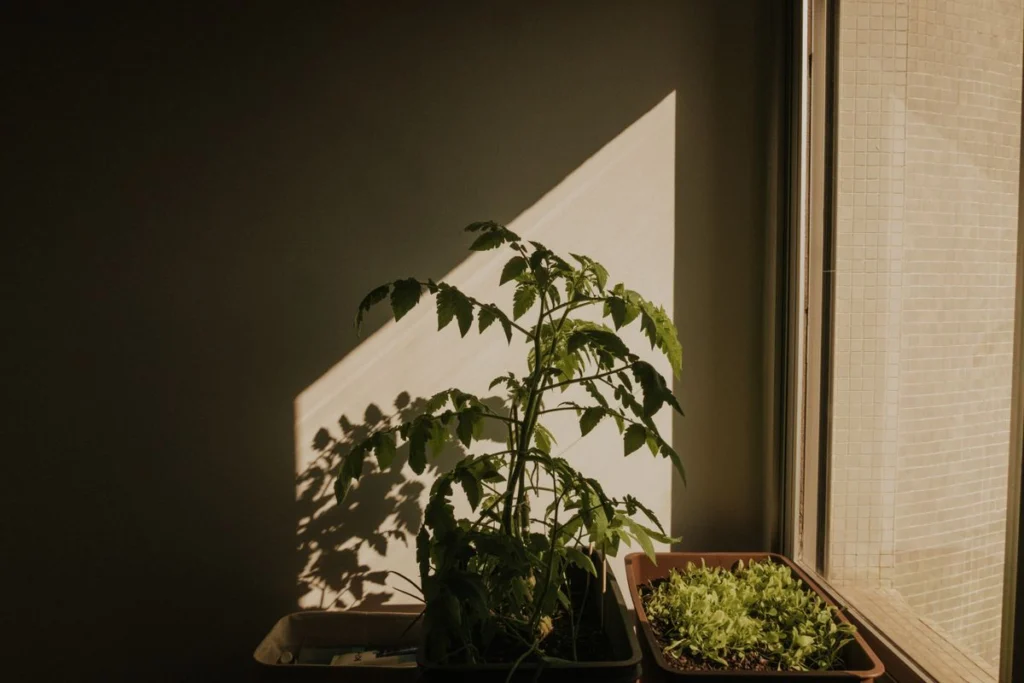
The biggest mistake home growers make is a pot that is too small. Tomatoes are hungry, thirsty plants with large root systems.
- Minimum size for cherry / dwarf varieties: 20 litres (about 30 cm diameter).
- Determinate bush varieties: 30 to 40 litres per plant.
- Indeterminate / large varieties: 50 to 75 litres per plant.
- Drainage: several holes at least 1 cm wide in the bottom. Cover with a mesh or piece of cloth to prevent soil loss.
- Material: plastic and glazed ceramic retain moisture best. Terracotta looks great but dries fast in hot climates. Fabric grow-bags are excellent for root health.
3. The right soil mix
Do not use pure garden soil, it compacts and drains poorly.
Recommended potting mix (for 40 L)
- 20 L quality compost or well-rotted manure
- 10 L coco coir or peat
- 10 L perlite, coarse sand, or crushed volcanic rock (for drainage)
- Handful of bone meal (phosphorus, for fruiting)
- Handful of wood ash (potassium, if available)
4. Planting
From seedling (most common)
- Wait until seedlings are 15 to 20 cm tall with at least 4 to 6 true leaves.
- Fill the pot with soil mix, leaving 5 cm from the rim.
- Dig a hole deep enough to bury the seedling up to its first set of leaves, tomatoes root along buried stems, giving a stronger plant.
- Set the seedling in, backfill, firm gently, water thoroughly.
- Install the stake or cage NOW, you cannot add it later without damaging the roots.
From seed
Sow in seed trays 6 to 8 weeks before the intended outdoor date. Transplant into the final pot at the 4 to 6 leaf stage.
5. Location and sunlight
- Minimum: 6 hours of direct sunlight per day.
- Ideal: 8 to 10 hours of morning-through-afternoon sun.
- In extreme heat (over 35 °C), afternoon shade helps prevent flower drop and blossom-end rot.
- Shelter from strong wind, which dries out pots fast and breaks stems.
6. Watering
Container tomatoes need more water than field tomatoes because pots dry out fast.
- Water deeply, until water runs out of drainage holes.
- Frequency: in hot weather, once daily; in cool weather, every 2 to 3 days.
- Always check by pushing a finger 5 cm into the soil, water if dry at that depth.
- Water at the base only; wet leaves invite disease.
- Consistent watering prevents blossom-end rot (the black bottom on tomatoes) and cracking.
- Mulch the top of the pot with straw or dry grass to reduce evaporation.
7. Feeding
Tomatoes are heavy feeders, especially in the confined soil volume of a pot.
- Weeks 1 to 3 after planting: nothing extra beyond the initial soil mix.
- Weeks 4 to 6 (vegetative): liquid feed with balanced NPK (like 10-10-10 or a compost tea) every 10 days.
- Once flowering starts: switch to a high-potassium fertilizer (NPK 5-10-15 or similar). Potassium drives fruit set and flavour. Foliar feeding accelerates response, see our guide to foliar fertilization.
- Calcium: crush eggshells into the soil at planting; supplement with a calcium foliar spray if blossom-end rot appears.
8. Staking and pruning
- Determinate varieties: a single stake or short cage is enough.
- Indeterminate varieties: strong stake at least 180 cm tall, or trellis system.
- Tie stems loosely with soft twine or fabric strips; check every 2 weeks.
- Suckering: on indeterminate plants, pinch off the small shoots that grow in the joint between the main stem and side branches. This concentrates energy into fruit rather than foliage.
- Never prune determinate varieties, you’ll cut off the fruit-bearing stems.
9. Common problems
- Blossom-end rot (black patch at base of fruit): calcium deficiency worsened by uneven watering. Fix: consistent watering + calcium supplement.
- Yellow lower leaves: normal if only the very bottom leaves; if spreading upward, likely nitrogen deficiency or overwatering.
- Cracked fruit: irregular watering. Fix: water more evenly.
- Flower drop with no fruit: temperatures over 35 °C or under 13 °C. Provide shade or wait for cooler nights.
- Late blight (mildiou): rapid dark spots on leaves and fruit, a serious threat in humid climates. See our detailed guide to tomato late blight treatment for prevention and rescue strategies.
10. Harvesting
- Pick when fully coloured but still firm.
- Twist and pull gently, or snip with scissors leaving the small green cap on the fruit.
- Harvest every 2 to 3 days at peak season.
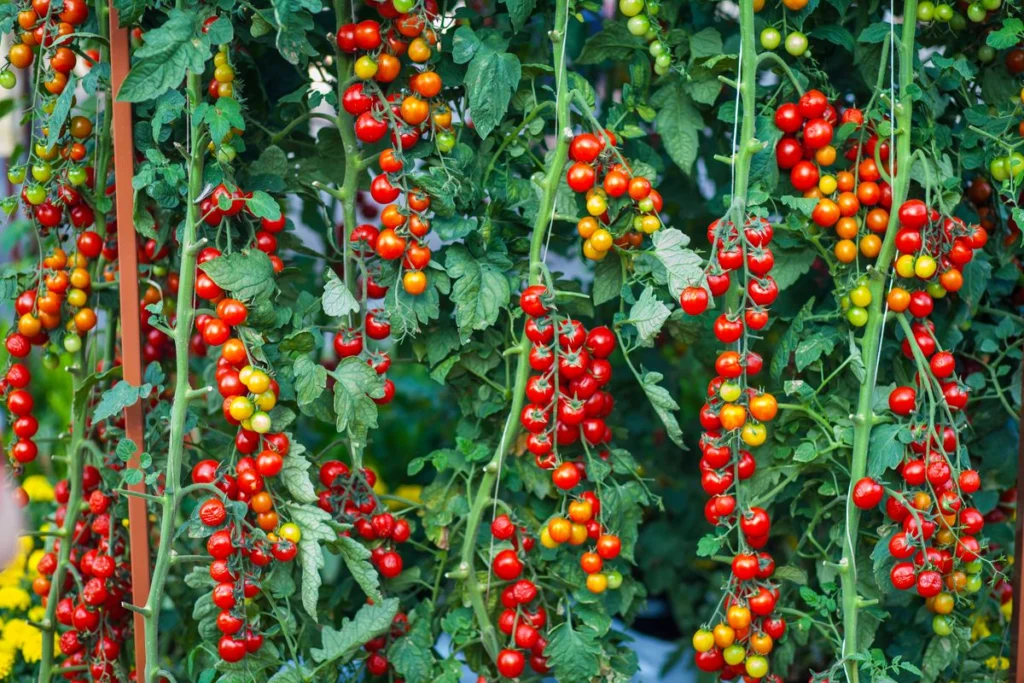
- Cherry varieties can produce 3 to 5 kg per plant over the season; indeterminate beefsteaks 5 to 10 kg.
11. Container tomatoes in a home garden system
Tomatoes in pots pair beautifully with other container herbs and vegetables. Grow cilantro in a smaller pot alongside, the cilantro tolerates the light shade tomato plants cast, and both are perfect for salsa. Garlic in a companion pot repels aphids and other tomato pests. For growers ready to scale up to a small commercial market garden, our complete guide to tomato planting covers field-scale cultivation and rentabilité (in French).
12. Cost breakdown for a home container tomato setup
Container tomato growing scales cost-effectively from a single pot to a productive rooftop operation. Rough all-in cost for a first-time setup with three plants:
- 3 large pots (40 L each): $30 to $60 or 15,000 to 30,000 FCFA depending on material.
- Potting mix ingredients: $20 to $40 or 10,000 to 20,000 FCFA for compost, coco coir, and perlite.
- Seedlings or seed: $6 to $15 for 3 quality seedlings, or under $5 for a seed packet that yields 20+ plants.
- Stakes and ties: $10 to $20 for bamboo stakes and soft twine.
- Liquid fertilizer (season supply): $15 to $25.
- Total first-year setup: $80 to $160 or 40,000 to 80,000 FCFA.
Year-two costs drop dramatically because pots, stakes, and grow-bags are reusable. Only potting mix (refreshed with fresh compost) and fertilizer need topping up. A 3-plant setup produces 12 to 25 kg of tomatoes per season, which at market prices covers the setup cost multiple times over.
13. Container tomatoes as a market-garden income stream
For urban and peri-urban growers with limited land, container tomatoes are one of the fastest-payback commercial market-garden ventures. A rooftop or courtyard with 50 well-managed 40 L containers can produce 400 to 700 kg of tomatoes per season for local restaurants, hotels, and premium retailers. Cherry tomatoes in particular fetch double the price of field-grown fruit and travel well because the containers can be moved to a shaded delivery spot at harvest time.
The key economics: rooftop growers pay no land rent, avoid most soil-borne diseases, and can rotate containers between growing sites. The main cost is water, which can be minimized with drip irrigation, see our guide to drip irrigation systems for African farms. Growers ready to expand beyond containers should read our complete guide to field-scale tomato planting, which covers commercial pricing and rentabilité in FCFA.
Article by the JOGOO Agriculture team. Growing figures are typical values and should be adapted to your climate, variety, and container setup.
Frequently asked questions
What size pot do I need for tomatoes?
The absolute minimum is 20 litres (about 30 cm diameter) for cherry or dwarf varieties. Determinate bush tomatoes need 30 to 40 litres per plant, and indeterminate vining varieties need 50 to 75 litres per plant. Small pots are the number one reason home-grown tomatoes underperform, the roots need room and consistent moisture.
How often should I water tomatoes in pots?
In hot weather, container tomatoes need watering once a day. In cool weather, every 2 to 3 days. Always test by pushing a finger 5 cm into the soil, water only if dry at that depth. Water deeply until it runs from drainage holes. Consistent watering is the key to preventing blossom-end rot and cracked fruit.
What is the best tomato variety for containers?
For beginners, cherry tomatoes like Sungold or Tumbler are the most productive and forgiving in pots. Compact determinate varieties like Roma, Patio, or Bush Early Girl are also excellent. Avoid large indeterminate beefsteaks unless you have a 50+ litre pot and can commit to serious staking and pruning.
Why are the bottoms of my tomatoes turning black?
Black or brown sunken patches on the bottom of tomatoes are blossom-end rot, caused by calcium deficiency, usually worsened by inconsistent watering. Fix: water on a consistent schedule (never let the pot dry out completely), add crushed eggshells or a calcium supplement, and mulch the pot to retain moisture. The affected fruits cannot be recovered but new fruits will develop normally.
Do I need to prune tomato plants in pots?
Indeterminate (vining) varieties benefit from pruning, pinch off the suckers (small shoots in the joint between main stem and side branches) to concentrate energy into fruit. Never prune determinate (bush) varieties, you’ll cut off the fruit-bearing stems. Also remove yellow lower leaves and any leaves touching soil to reduce disease.
Related articles

Get the full guide offline. Enter your details below.